
- Home
- Dental Treatments
- Restorative & Dental Implants
- Dental Veneers
Dental Veneers — Porcelain & e.max Ceramic Smile Transformation in Bangalore
Modern cosmetic dentistry is about subtle, natural-looking upgrades, and dental veneers are the go-to option when you want a noticeable change with a refined finish. A veneer is a finely crafted ceramic layer, usually only a few tenths of a millimetre thick, bonded to the front surface of the tooth to correct discolouration, uneven edges, minor gaps, and shape discrepancies in a single integrated solution. Because the ceramic is colour-matched and translucent like enamel, the final result blends seamlessly with your smile and facial features.
At Dental Solutions Clinic in Indiranagar, Bangalore, veneer smile makeovers are planned and delivered by specialist Prosthodontist Dr. Ramya Balasubramanya — MDS Prosthodontics, BDS Gold Medallist (RGUHS University Topper), and Certified Digital Smile Design (DSD) Practitioner trained under DSD founder Dr. Christian Coachman. Every multi-veneer case follows a full DSD workflow — facial proportion analysis, digital wax design, and a physical “trial smile” mock-up in your own mouth — so you can see and refine your new smile before any tooth is prepared.
What Are Dental Veneers?
Dental veneers are thin, custom-made shells (usually porcelain or high-strength ceramic) bonded to the front of the teeth. They are designed to change the visible colour, shape, length, or alignment of the tooth while keeping most of the tooth structure underneath.
Who needs dental veneers?
Porcelain veneers are especially suitable for:
- Intrinsic discolouration that does not respond well to whitening (for example, tetracycline staining, fluorosis, or darkening after root canal treatment).
- Teeth that are an acceptable size and position but have unsatisfactory colour, surface texture, or minor contour issues.
- Mild to moderate wear of the labial surface and incisal edge of front teeth.
Chipped or fractured front teeth where a substantial part of the visible surface is involved. - Mild spacing or diastema closure where the patient prefers a non-orthodontic approach.
- Planned smile makeovers involving several upper (and sometimes lower) front teeth for a coordinated smile line.
- Teeth with notable shape irregularities, such as peg laterals or undersized teeth, need proportion correction.
Stage 1: Digital Smile Design Consultation
The first visit focuses on diagnosis and planning rather than tooth preparation. High-resolution photographs and short videos of your face and smile at rest, speaking, and laughing are captured and imported into DSD software. Using these, Dr. Ramya analyses your facial midline, lip line, smile arc, and tooth proportions to design tooth shapes and positions that harmonise with your facial features.
A digital simulation of your proposed new smile is then overlaid on your own images so you can visualise potential changes before any clinical steps are undertaken. Adjustments to tooth length, width, and overall style are made at this stage.
Stage 2: Diagnostic Wax Up and “Trial Smile”
Once the digital design is approved, it is sent to the laboratory for a diagnostic wax-up — a 3D model showing your proposed final tooth shapes. A silicone matrix is created from this wax-up, filled with provisional resin, and placed over your existing teeth to produce a temporary “trial smile” without altering your enamel.
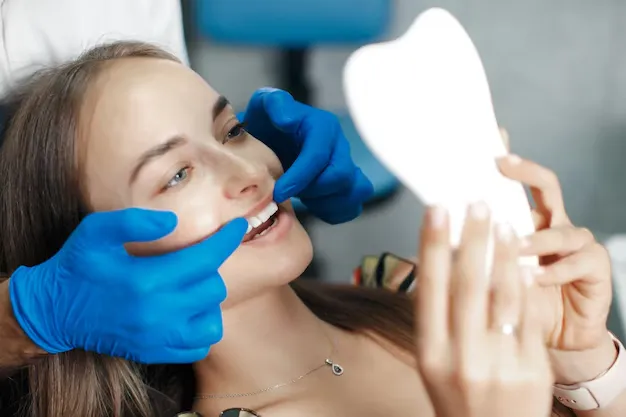
You can view this in the mirror, in photos, and in natural light; speak and smile with it; and discuss refinements before committing to any preparation. At Dental Solutions Clinic, this mock-up step is standard for multi-veneer cases.
Stage 3: Tooth Preparation
After you approve the trial smile, minimal preparation is carried out to create space for the ceramic. Typically, 0.3–0.7 mm of enamel is removed from the front and edge of each tooth, guided by depth-cut burs and wax-up to ensure a conservative, even reduction. Wherever possible, the preparation remains enamel-bound, which optimises bond strength and veneer longevity.
A digital impression is then recorded with the Planmeca Primescan, and provisional veneers based on your mock-up are temporarily bonded. These temporaries protect the teeth, allow normal function, and give you a chance to live with the new shape and length while the final ceramics are fabricated.
Stage 4: Ceramic Fabrication (In Clinic CAD/CAM)
Your digital model and design specifications are processed in-house using our CAD/CAM system. Depending on aesthetic and functional needs, veneers are designed in software and then milled or pressed from feldspathic porcelain or e.max lithium disilicate blocks using our inLab MC X5 5-axis milling unit by Dentsply Sirona. Because this fabrication occurs within Dental Solutions Clinic rather than an external lab, we can fine-tune details such as shape, contact points, and characterisation more efficiently and, in selected cases, shorten overall treatment time.
Stage 5: Fitting and Bonding
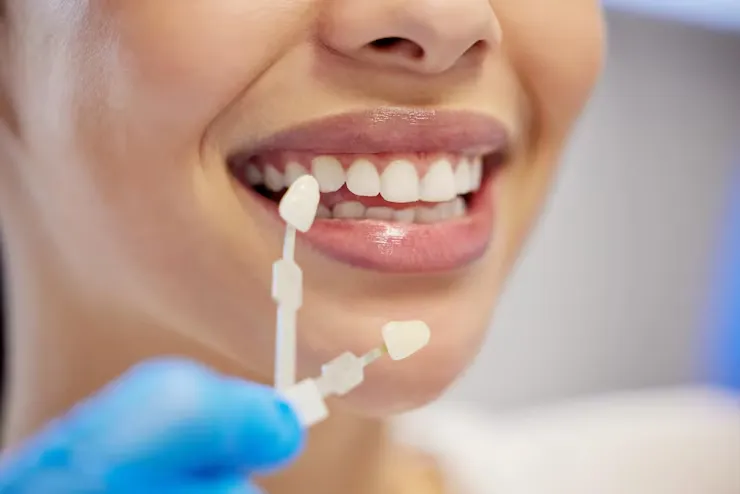
At the fitting appointment, the temporary veneers are removed, and the prepared teeth are cleaned. Each veneer is tried in individually with a matching try-in paste to confirm colour, fit, and translucency in different lighting before bonding. Any necessary shade or contour adjustments are addressed with the laboratory at this point.
Stage 6: Review and Fine-Tuning
A follow-up visit scheduled for 2–4 weeks is to review gum health around the veneers, reevaluate the bite, and ensure you are fully comfortable with the results. Final photographs document the outcome relative to your pre-treatment and mock-up records.
Veneer Procedure — Step by Step

Outcomes, Recovery & Aftercare

Longevity and Clinical Performance
When planned appropriately and bonded to sound enamel, porcelain veneers have been reported to exhibit 10-year survival in the mid-90% range, with many lasting well beyond that timeframe. The main reasons for failure in the literature are debonding, chipping or fracture (often associated with uncontrolled bruxism or trauma), and marginal decay due to poor hygiene.
Sensitivity and Comfort
Some patients experience temporary sensitivity to cold after tooth preparation, particularly if the preparation approaches the dentine–enamel junction. This typically reduces once provisional and then permanent veneers are in place. Severe or persistent discomfort is uncommon and should be reported promptly.

Gum Response
The gum tissue around newly placed veneers usually settles over several weeks. A small degree of margin adaptation or recession can occur as the tissue stabilises, which is reviewed at the follow-up visit.

Care Guidelines
- Avoid biting directly into very hard foods with veneered teeth in the early weeks; use your back teeth instead.
- Minimise intake of highly staining foods and drinks for the first 48 hours after bonding, while the resin cement sets.
- Wear any prescribed nighttime splint regularly if you clench or grind.
- Avoid using your teeth to open packaging or bite nails.
- Maintain excellent brushing and flossing around veneer margins; these areas are most susceptible to decay if plaque accumulates.
Why Choose Dental Solutions Clinic for Veneers in Bangalore?

Certified Digital Smile Design planning
Your veneers are designed around your facial proportions and smile dynamics, not a generic template.

Mock up before preparation
You can see and feel your proposed new smile in your own mouth before any enamel is removed.

Fully digital workflow
Planmeca Primescan intraoral scanning ensures accurate, comfortable impressions and precise communication with the ceramic lab.

Case-specific ceramic selection
e.max lithium disilicate is used where strength is critical; feldspathic porcelain is chosen where maximum translucency and nuance are required.

Specialist prosthodontic expertise
As a BDS Gold Medallist and MDS Prosthodontist, veneer design, fit, and bite integration are core areas of Dr. Ramya’s daily practice.

Extensive cosmetic and restorative experience
With decades of practice and thousands of ceramic restorations, the clinic combines aesthetic planning with long-term functional stability.
Dental Veneers Before & After Results
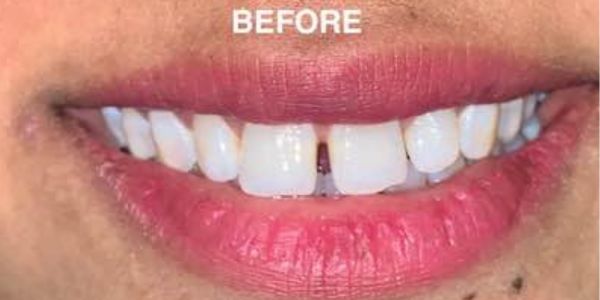
Seeing real cases is often the easiest way to understand what porcelain and e.max veneers can achieve. These are real clinical cases from Dental Solutions Clinic — not stock images or manufacturer-supplied photographs.
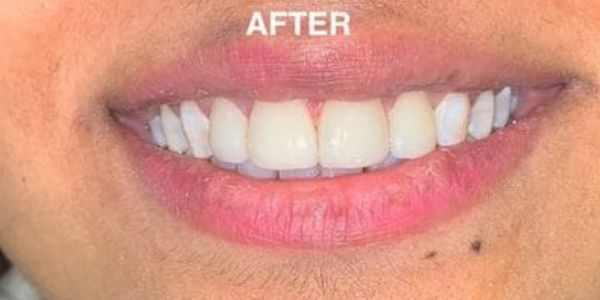
Dental Veneers Cost in Bangalore
Porcelain and e.max ceramic veneers at Dental Solutions Clinic typically range from ₹12,000 to ₹20,000 per tooth, depending on the material, case complexity, and whether additional procedures (such as gum contouring or bite correction) are required. This includes Digital Smile Design planning, in-clinic CAD/CAM fabrication, and fitting. A detailed, itemised fee estimate is provided after your consultation and smile analysis.
Frequently Asked Questions
How long do porcelain veneers last?
Published clinical studies report 10-year survival rates of 93–96% for porcelain veneers placed with correct adhesive technique and appropriate case selection. The most common cause of failure is ceramic fracture in patients with uncontrolled bruxism, which is why an occlusal splint is prescribed wherever grinding is identified. Veneers that debond can, in most cases, be rebonded. With proper home care, regular professional maintenance, and an occlusal splint where indicated, veneers routinely last 15–20 years or longer.
Are veneers reversible?
Veneer preparation involves removing a thin layer of enamel from the tooth surface, which cannot be restored. Once your teeth are prepared for veneers, they will always need a veneer or crown to protect and restore the affected surface. That is why careful case selection, patient education, and the mock-up stage, allowing you to preview and approve the result before any preparation, are essential steps at Dental Solutions Clinic.
Will veneers look natural?
Yes, when the shade, translucency, and surface texture are correctly designed. The key is matching the optical properties of the ceramic to your natural dentition: the translucency at the incisal edge, the characteristic surface texture of enamel, and the shade gradient from gingival to incisal third. This is a function of material selection, laboratory quality, and the clinician’s aesthetic precision at the fitting stage. At DSC, try-in is conducted under multiple light sources and is not rushed.
Can I whiten my teeth before getting veneers?
Yes, and it is recommended. The ceramic shade is matched to your natural teeth. If you whiten your natural teeth first, the veneers can be matched to a lighter shade, giving you a uniformly brighter result across both veneer and non-veneer teeth. Allow at least 2 weeks after completing whitening before taking the shade for veneer fabrication — tooth colour continues to shift for approximately 2 weeks after bleaching.
Do veneers require special maintenance?
No special maintenance is required beyond excellent oral hygiene. Floss daily at the veneer margins — this is the highest-risk site for secondary decay. Use a non-abrasive toothpaste (avoid charcoal or baking soda products that abrade the cement at the margins). Attend professional cleaning and maintenance every 6 months. Avoid biting into very hard food directly with veneer teeth. Wear your occlusal splint every night if prescribed.
What is the difference between veneers and composite bonding?
Veneers are thin shells of ceramic, fabricated in a laboratory and bonded permanently to the tooth surface. Composite bonding is tooth-coloured resin applied directly to the tooth in a single appointment and sculpted chairside. Veneers last longer (15–20+ years vs 5–10 years), are more stain-resistant, and have higher strength. Bonding requires no or minimal tooth preparation, is reversible, and is more cost-effective. The right choice depends on your specific concerns, the number of teeth involved, and the degree of change required. See the comparison table on both pages.