
Digital Dentistry — A Fully Integrated Digital Workflow at DSC, Indiranagar, Bangalore
Digital dentistry is not a single technology. It is a connected workflow where each digital tool passes precise data to the next, from the first scan to the final restoration. When that chain is complete, and the systems talk to each other, accuracy and predictability are far higher than with a mainly analogue process that uses only one or two digital steps.
At Dental Solutions Clinic in Indiranagar, Bangalore, this workflow is end-to-end: 3D CBCT, RVG X-rays, intraoral scanning, clinical photography, CAD/CAM ceramics, Digital Smile Design, guided implant surgery, and digital orthodontic planning are all in-house and integrated into one system. Data captured at any stage is available at every other stage, supporting CBCT planned implants, scan based crowns and veneers, and digitally designed smiles that are previewed and approved before irreversible treatment begins.
What Is Digital Dentistry?
Digital dentistry uses computer based technologies to replace or enhance traditional steps in diagnosis, planning, and fabrication. In a genuinely digital practice, imaging, impressions, design, manufacturing, and records all exist as linked digital data rather than separate physical items. CBCT bone data guides implant planning, which in turn guides prosthetic design; intraoral scans feed CAD/CAM software; and the same scans and photos feed Digital Smile Design and Invisalign planning.
The key differentiator is integration: using a scanner but still pouring stone models, or owning CBCT but taking physical implant impressions, does not capture the full accuracy and efficiency that digital systems can offer. The real clinical benefit comes when every stage is connected.
Digital Technologies at Dental Solutions Clinic

3D imaging of teeth, bone, sinuses, and TMJ for implant planning, complex periodontal cases, impacted teeth, root anatomy, and skeletal analysis, with the field of view tailored to each case.

Replaces conventional impression trays for crowns, veneers, implants, Invisalign records, and study models; full arch scans reach high accuracy and pass directly into CAD/CAM, DSD, and aligner planning.

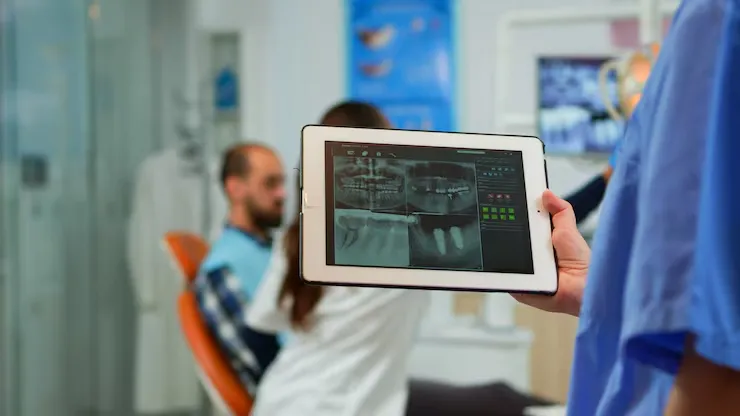
Chairside digital periapical and bitewing images in seconds at substantially reduced radiation doses compared with film, with on screen measurement and enhancement tools.

Clinical photography – standardised HD images
A structured photo series for every cosmetic and complex case, used for Digital Smile Design, shade matching, and before/after documentation.

Crowns, veneers, bridges, onlays, and implant prosthetics are designed from scan data and milled from e.max or zirconia blocks for precise margins and consistent material quality.

Facial referenced smile planning that overlays proposed tooth shapes and lengths on your own photos, then feeds into wax ups, trial smiles, and CAD designs.

Guided implant surgery
Virtual implant placement in the CBCT dataset, followed by 3D printed surgical guides that transfer the digital plan accurately to the mouth.

Invisalign ClinCheck planning
Scan based digital simulations of tooth movement are reviewed with you before clear aligner treatment begins and coordinated with restorative plans when needed.
How the Connected Digital Workflow Works
In a full cosmetic or rehabilitative case, the data chain typically looks like this:

Diagnosis
CBCT and RVG images provide 3D bone and detailed tooth information.
Baseline records – Primescan scans plus standardised photographs capture your teeth and smile in digital form.

Smile design
DSD uses the photos and scans to create a facially referenced smile design for you to review and approve.

Trial smile
Lab wax up and composite mock up, translate the design into a reversible version in your mouth.

Preparation and scan
Teeth are prepared as needed, then rescanned for precise digital models.

Restoration design
CAD software designs the ceramic restorations using the scan and DSD blueprint.

Milling and finishing
Restorations are milled to the design and characterised as required.

Fitting and records
Restorations are tried in, adjusted if needed, bonded, and documented with post treatment photos and scans.
At each step, the output from the previous tool becomes the input for the next. This continuity reduces distortions and errors that can creep in when physical impressions, stone models, and manual transfers are used.
Conventional vs Digital — What Changes for You as a Patient
| Step | Conventional Workflow | Digital Workflow at DSC |
|---|---|---|
| Impressions | Trays with impression material, potential gagging | Scan wand only; fast, clean, no impression material |
| X-rays | Film, chemical developing, and more radiation | Instant RVG images with lower dose |
| Implant Planning | 2D panoramic and estimation | 3D CBCT planning and guided surgery |
| Smile Preview | Verbal explanation, shade tabs | Digital design overlay plus reversible trial smile |
| Crown/Veneer Fabrication | Stone models and manual wax-ups | CAD design and precision-milled ceramics |
| Records | Paper notes, occasional photos | Full digital record: scans, CBCT, photos, designs |
Why Digital Integration Matters Clinically
For nervous or international patients, the digital workflow also simplifies logistics: key planning can be done remotely, and appointment schedules can be built around reliable, pre planned steps rather than trial and error adjustments.

Improved accuracy and fit
High precision scans and CAD/CAM reduce common causes of restoration failure such as poor margins, inaccurate contacts, and shade mismatch.

Safer, more predictable surgery
CBCT guided implant placement and digital planning help avoid vital structures and place implants where the prosthetic design requires.

Better communication and control
DSD and digital mock ups let you see and adjust proposed changes before teeth are prepared or implants are placed.

Reduced rework and chair time
Accurate first time scans, plans, and milled restorations lower the likelihood of remakes and lengthy adjustments.

Complete digital documentation
CBCTs, scans, photos, and design files are stored securely and can be shared or revisited years later if needed.
Frequently Asked Questions
Does digital dentistry cost more than conventional treatment?
Fees at DSC reflect specialist time, materials (e.max, zirconia), and the planned outcome, not a “technology surcharge.” In many cases, the digital workflow actually reduces overall cost by avoiding remakes and corrective appointments.
Do I need to go elsewhere for scans or imaging?
No. All key diagnostics — CBCT, RVG X-rays, intraoral scans, photography, DSD planning, and CAD/CAM coordination — are performed in-house at Dental Solutions Clinic, which is especially helpful for patients on tight schedules or travelling in.
Can you use my records from another clinic?
Often yes. Digital CBCT (DICOM), scans (STL), and X rays can usually be imported. Older physical records can be digitised where useful, but DSC will typically take a fresh CBCT and scan, so planning is based on current, accurate data.
Is digital dentistry better for nervous or anxious patients?
It usually is. Scans replace messy impressions, RVG images appear instantly, DSD and trial smiles show the likely result before drilling, and guided implant surgery is more controlled — all of which remove common anxiety triggers.
What happens to my digital records if I move or change dentists?
Your records are yours. On request, DSC can provide CBCT files, scans, photos, and X rays in standard formats that any modern clinic can use. They are stored securely for the legally required period.
Does digital technology mean fewer X rays overall?
Generally yes. Digital systems produce diagnostic images with fewer retakes; CBCT often replaces multiple 2D views with a single scan; and stored images are easy to retrieve, so they do not need to be repeated just because films are missing.