Oral Surgery — Expert Extractions, Bone Surgery & Trauma Management in Bangalore
Many oral surgery procedures are often unfairly seen as severe. However, with a specialist using the proper tools and techniques, modern oral surgery is usually predictable, less discomforting, and heals faster than most patients anticipate.
At Dental Solutions Clinic in Indiranagar, Bangalore, Dr. Balasubramanya K V, a specialist Periodontist and Laser Dentistry expert with BDS, MDS (Periodontics), a Diploma and Master’s in Laser Dentistry from the University of Vienna (SOLA), and soft and hard tissue laser training from KAVO Bibrach (Germany) and LAHA (Ljubljana, Slovenia). His expertise covers everything from routine extractions to complex bone surgeries, pre-implant site preparation, dental trauma treatment, and laser-assisted minor oral surgical procedures.
Not every tooth needs removal, nor does every bone defect require extensive surgery. When surgery is necessary, it should be carefully planned, performed gently, and managed with healing in mind from the outset. That is the purpose of this department.
What Is Oral Surgery?
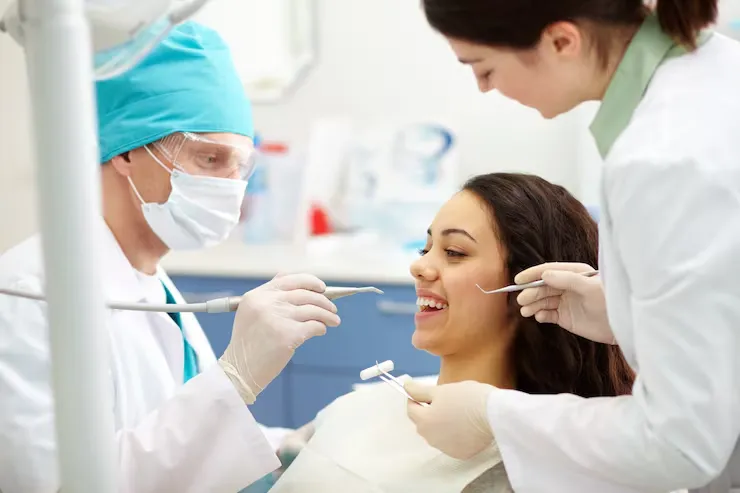
Oral surgery is a dental speciality that involves surgical procedures on the teeth, jaw, and supporting bone. It includes extracting teeth that cannot be saved or are impacted, preparing bone surgically for dental implants, treating jaw injuries and dental traumas, and removing cysts, lesions, or abnormal soft and hard tissues.
A specialist periodontist and laser dentistry expert like Dr. Balasubramanya offers the diagnostic accuracy, 3d imaging skills, and surgical expertise essential for complex oral surgery cases. Many patients sent to hospital oral surgery departments can instead be treated in a specialist clinic, often experiencing shorter wait times and a more patient-focused recovery plan.
Oral Surgery Conditions We Treat

Impacted Wisdom Teeth
Impacted wisdom teeth that don’t fully erupt can lead to recurrent pain, infections such as pericoronitis, damage to neighbouring second molar roots, cyst formation, and crowding in the dental arch. Surgical removal involves extracting the impacted tooth, sometimes in sections, followed by closing the surgical site. Most patients can return to normal activities within 3–5 days. For teeth with atypical root structure, near the inferior alveolar nerve, or close to the maxillary sinus, pre-operative planning with CBCT scans is recommended.
Complex and Surgical Extractions
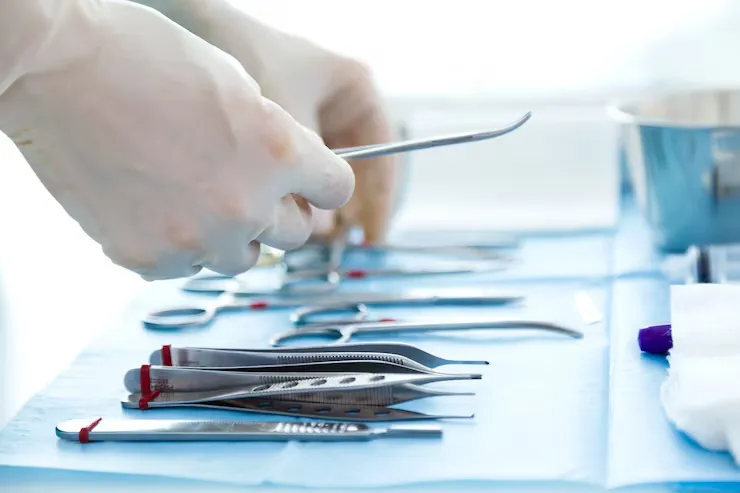
Not all extractions are simple procedures. Teeth affected by hypercementosis, curved or fused roots, previous root fractures, significant decay below the gum line, or those that have undergone endodontic treatment and are fragile usually require surgical treatment. This involves raising a flap, removing bone if needed, and sectioning the tooth before extraction. Trying to perform these as straightforward extractions can cause root fractures and markedly raise the chance of postoperative complications.
Retained Roots and Root Stumps
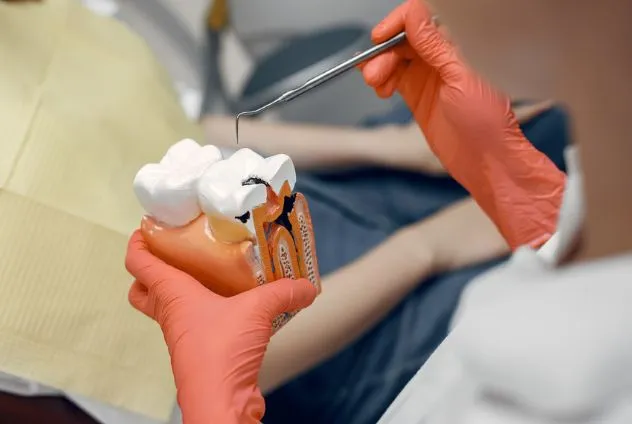
Broken root tips left from previous extractions, retained root stumps from non-vital teeth, and roots linked to periapical pathology all need surgical removal. These are planned procedures, not urgent cases, and require CBCT imaging beforehand to map the root anatomy and its relation to nearby structures.
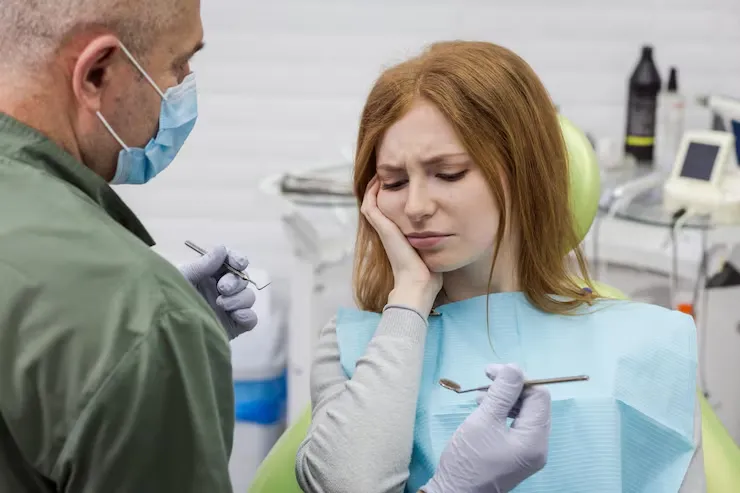
Dental Trauma — Injuries, Avulsed and Fractured Teeth
Dental injuries caused by accidents, falls, contact sports, or traffic incidents—including tooth avulsion (complete displacement), crown-root fractures, and alveolar bone fractures—necessitate prompt, staged surgical treatment. The specific approach varies based on the injury type and severity, the stage of tooth development, the time since injury, and whether the tooth was stored correctly. Replantation procedures for avulsed teeth are highly time-sensitive — contact us immediately.
Periapical Cysts and Oral Pathology
Periapical cysts, radicular cysts, odontogenic keratocysts, and other jaw lesions are identified through CBCT imaging and necessitate surgical enucleation or marsupialisation. All removed tissue is sent for histopathological analysis. Detecting lesions early makes treatment much easier — highlighting the importance of routine radiographic reviews as part of comprehensive dental care.
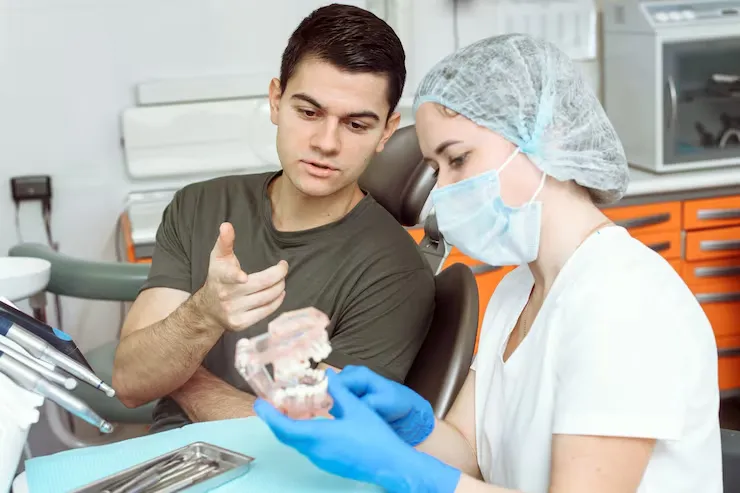
Surgical Tooth Exposure for Orthodontic Traction
Teeth that do not erupt into the dental arch—most often upper canines—need to be surgically uncovered so an orthodontic bracket can be attached and traction can be initiated. This small surgical procedure is done in close collaboration with your orthodontist and usually lasts 30–45 minutes under local anaesthesia.
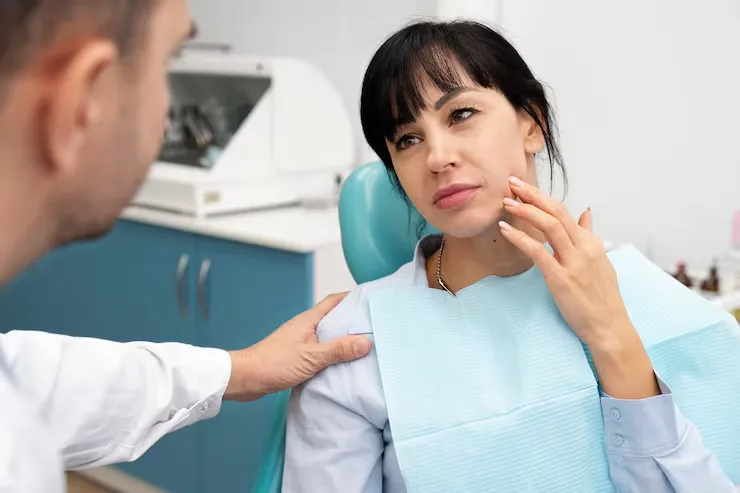
Frenectomy — Frenum Excision
An abnormally attached labial or lingual frenum can lead to diastema (spacing between teeth), limited tongue movement (tongue tie), gum recession at the frenum attachment, and challenges with denture stability. Laser-assisted frenectomy with the Fotona LightWalker often eliminates the need for sutures and greatly decreases post-operative pain and healing time relative to traditional scalpel methods.
Our Oral Surgery Treatments

Surgical Tooth Extraction
Surgical removal of teeth that cannot be extracted with simple forceps. This includes a full assessment, CBCT imaging, performing the surgical procedure under local anaesthesia, and providing written post-operative instructions. Pain management strategies are discussed during the consultation.

Wisdom Tooth Removal
Surgical tooth extraction of impacted third molars, whether partial or complete. When wisdom teeth are near the inferior alveolar nerve or maxillary sinus, imaging with the PLANMECA Promax CBCT scanner is utilised. This precise imaging enables meticulous planning of the surgical approach down to the millimetre before making any incision.

Socket Preservation (Alveolar Ridge Preservation)
When a tooth is extracted, and an implant is to be placed in the same site, it’s essential to preserve the extraction socket to prevent bone resorption during healing. Socket preservation involves using bone graft material and, if necessary, a collagen membrane to maintain the ridge dimensions required for successful implant placement. This procedure is performed at the time of extraction and is not done as a separate step.

Guided Bone Regeneration (GBR)
When the bone volume at a proposed implant site is inadequate—caused by prior extraction, infection, or trauma—guided bone regeneration (GBR) employs barrier membranes and bone substitute materials to rebuild the missing bone. The area is then allowed to mature for 4–6 months before the implant is inserted. Additionally, GBR is used to treat bone defects around existing implants impacted by peri-implantitis.

Sinus Floor Elevation (Sinus Lift)
The upper back part of the jaw often has limited bone height because of maxillary sinus pneumatisation after tooth loss. When the bone is too short for regular implants, the sinus floor is elevated, and bone graft material is placed beneath the Schneiderian membrane to boost vertical bone height. Both lateral window and minimally invasive crestal approaches can be used, depending on the existing bone height. At Dental Solutions Clinic, the Densah bur crestal sinus lift is applied for cases with 5–7mm of residual bone.

Laser-Assisted Minor Oral Surgery
The Fotona LightWalker Er: YAG laser is used for soft-tissue procedures such as frenectomy, gingivectomy, operculectomy, and minor lesion removal, replacing traditional scalpel-based methods. Laser surgery minimises bleeding, often eliminates the need for sutures, and generally promotes quicker, more comfortable healing. Additionally, the Nd: YAG wavelength is used for bacterial decontamination during surgery.
Technology We Use —Why It Matters
Surgical precision depends on the quality of planning information available before the procedure begins. At Dental Solutions Clinic, every oral surgery case is supported by:
PLANMECA ProMax CBCT
Three-dimensional bone imaging for root anatomy, nerve proximity, sinus mapping, and implant site assessment before any surgical procedure
Fotona LightWalker Er: YAG + Nd: YAG Dual-Laser
Laser-assisted soft tissue surgery, socket decontamination, and frenectomy without a conventional scalpel
Digital OPG and periapical RVG
Immediate chairside radiography for diagnosis and post-operative review
Piezoelectric surgical unit
Ultrasonic bone surgery for sinus lifts and ridge expansion with significantly less vibration and trauma than conventional burs
Surgical operating microscope
For retained root retrieval and procedures requiring magnified visualisation
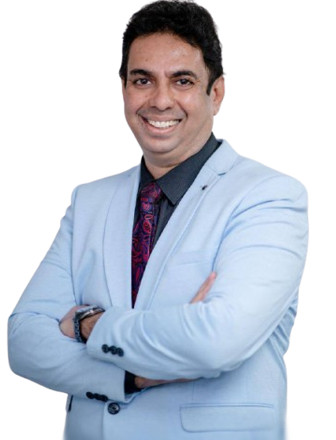
Meet Your Treating Specialist
Dr. Balasubramanya K V
All oral surgery at Dental Solutions Clinic is performed by Dr. Balasubramanya K V. His surgical qualifications and training include:
- BDS, MDS (Periodontics)
- Diploma in Laser Dentistry — SOLA, University of Vienna, Austria
- Master’s in Laser Dentistry — SOLA, University of Vienna, Austria
- Soft & Hard Tissue Laser Training — KAVO Bibrach, Germany
- Soft & Hard Tissue Laser Training — LAHA, Ljubljana, Slovenia
- LANAP Certified Practitioner
- Fotona LightWalker Certified Operator
- Karnataka State Dental Council — Registered Specialist
- Member: IDA, Indian Society of Periodontology (ISP)
- Professor & Head of Department — Dental Sciences, Sakra World Hospital, Bangalore
- 25+ years of specialist practice in Indiranagar, Bangalore
Frequently Asked Questions
How long does recovery take after a surgical tooth extraction?
Most patients undergoing a simple surgical extraction experience mild to moderate discomfort for 2–3 days, which is effectively managed with prescribed anti-inflammatory medication. When removing wisdom teeth, especially fully impacted ones, swelling and discomfort usually peak within 48 to 72 hours and significantly lessen by Day 5–7. During the first week, a soft diet is recommended, and rinsing is avoided for the first 24 hours. Written post-operative instructions will be provided at your appointment.
Does wisdom tooth removal always require surgery?
Not always. Wisdom teeth that have fully erupted into a normal position can sometimes be removed with a simple extraction. However, partially erupted, horizontally impacted, or deeply embedded wisdom teeth require a surgical approach — raising a gum flap and, in many cases, sectioning the tooth before removal. Your CBCT will determine the appropriate approach for your specific anatomy before any procedure is scheduled.
My tooth was knocked out in an accident. What should I do immediately?
Act within the first 30–60 minutes, as this is the crucial window for successful replantation. Handle the tooth by its crown—not the root. If contaminated, rinse gently with saline or milk; avoid scrubbing. Keep the tooth moist by repositioning it in the socket if possible, holding it between your cheek and gum, or placing it in a container of milk. Contact us immediately at +91 63643 12444. Delays beyond this time decrease the chances of successful reattachment.
Is laser oral surgery more expensive than conventional surgery?
Laser-assisted procedures at Dental Solutions Clinic are competitively priced with traditional surgical methods. The clinical benefits—such as less bleeding, quicker healing, fewer postoperative issues, and often no need for sutures in soft-tissue cases—make laser the preferred choice for appropriate procedures. Costs are fully explained during the consultation before any surgery is scheduled.
Can I eat normally before oral surgery?
If your procedure is done under local anaesthesia only, you can eat and drink normally beforehand. If sedation is planned, you will receive specific fasting instructions based on the type of sedation. Your pre-operative instructions will be clearly explained during the consultation.
I have a blood-thinning medication. Is oral surgery still safe?
Yes, this applies to most patients. You should disclose all medications — including warfarin, aspirin, clopidogrel, and novel oral anticoagulants (NOACs) — during your consultation. We will communicate with your physician if needed and modify the surgical and postoperative plans to properly manage bleeding risks. Do not discontinue own before a dental procedure.