
Discoloured Teeth | Causes, Types and Treatment in Indiranagar, Bangalore
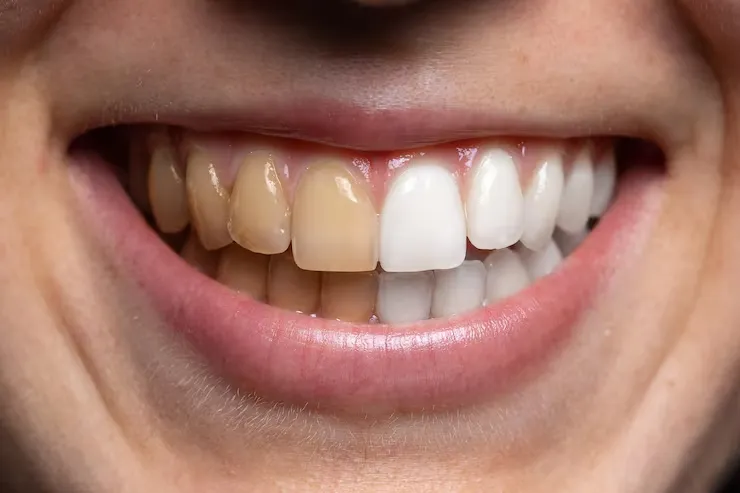
Tooth discolouration is one of the most common cosmetic concerns patients bring to a dental clinic, yet it is also one of the most frequently mistreated. The key clinical question is simple: is the colour change on the surface of the tooth, or inside it? Surface staining usually responds to cleaning and whitening, whereas deeper intrinsic discolouration does not and often needs veneers, crowns, or internal bleaching instead. When this distinction is overlooked, patients invest in whitening treatments that do not work and remain unhappy with the results.
At Dental Solutions Clinic in Indiranagar, Bangalore, every case of tooth discolouration is personally assessed by Dr. Ramya Balasubramanya — MDS, Prosthodontics, BDS Gold Medallist, Certified Digital Smile Design (DSD) Practitioner. She diagnoses the type and cause of discolouration first, then recommends treatment that directly matches that diagnosis, so you are not offered whitening when you actually need a veneer, crown, or root canal–based treatment.

What Is Tooth Discolouration?
Tooth discolouration means a change in the normal colour or uniformity of a tooth or group of teeth. Dentists divide it into three main patterns:
- Extrinsic discolouration (surface staining)
Stains sit on the outer surface of the tooth, mainly on the pellicle — a thin protein film that coats the enamel. Food and drinks like tea, coffee, red wine, as well as tobacco and pigments from some bacteria, can all create these surface stains. - Intrinsic discolouration (internal colour change)
The tooth itself has changed colour from within the enamel, dentine, or both. Causes include trauma, developmental conditions, certain medications, and changes in the tooth’s pulp (nerve). - Internalised extrinsic staining
Surface stains have slipped into enamel cracks or weak, porous enamel, so the tooth looks stained even though the original cause was external.
This classification matters because it tells us what will and will not work. Surface staining can usually be removed with scaling, polishing, and supervised whitening; true intrinsic discolouration is rarely improved by whitening alone and normally needs veneers or crowns to cover it completely. Bleaching intrinsically discoloured teeth may give only a small change and can make them look worse next to freshly whitened neighbouring teeth.
How Tooth Discolouration Develops?
Several common processes can change tooth colour over time:

Lifestyle and surface stains
Tea, coffee, cola, red wine, coloured foods, tobacco, and pigments from certain bacteria stick to the pellicle and rough areas of enamel or fillings. Brushing helps, but cannot remove all of these deposits; professional scaling and polishing are needed for a full clean.

Age‑related yellowing
As you age, enamel slowly wears and thins, so the naturally yellower dentine underneath shows through more. At the same time, more dentine is laid down inside the tooth, gradually deepening the overall tooth colour.

Fluorosis
Too much fluoride during tooth development (usually before age 8) can disrupt normal enamel mineralisation. This produces white, opaque spots, brown mottling, or pitted enamel, which often respond poorly to standard whitening.

Tetracycline staining
Tetracycline antibiotics taken during tooth formation can become incorporated into dentine and create grey, blue, or yellow‑brown horizontal bands across teeth. These stains are deep and difficult to bleach fully.

Pulp necrosis and internal staining
After trauma or deep decay, a tooth’s nerve can die; breakdown products then diffuse into the dentine, darkening the tooth from within, often over several months.

Developmental defects
Conditions like amelogenesis imperfecta and dentinogenesis imperfecta affect the way enamel or dentine forms, producing generalised brown, grey or chalky discolouration and often weaker tooth structure across the whole dentition.

When Discolouration Needs Urgent Attention
A tooth that has been gradually darkening over weeks or months, even if it feels fine, should be examined promptly. This may signal nerve death or internal resorption, conditions that develop silently and are much easier to treat if caught early through a clinical exam and a periapical radiograph.
How We Assess Discoloured Teeth at Dental Solutions Clinic?
Your visit for discoloured teeth typically follows a clear, step‑by‑step process:
- Visual examination – We note how many teeth are affected, where the discolouration appears, and whether it appears as a surface stain, white opacity, banding, or deep dentine colour.
- Shade mapping and photographs – Standardised clinical photos with a shade guide document your starting shade and help us and the lab plan any veneers or crowns accurately.
- Digital X‑rays (RVG) – Any isolated dark tooth is imaged with a periapical radiograph to check nerve status and the surrounding bone before cosmetic work begins.
- Vitality tests – Electric pulp and cold tests tell us whether the nerve is alive, dying, or non‑vital.
- White spot assessment – For white spot lesions, devices such as laser fluorescence meters (for example, DIAGNOdent) help distinguish early, reversible spots from deeper lesions that need more than remineralisation.
Treatment Options for Discoloured Teeth

Professional Teeth Whitening
Professional teeth whitening in-clinic or with custom home trays is ideal for:
- General yellow or yellow‑brown discolouration
- Lifestyle‑related surface stains after a full professional clean
Results are most predictable for yellow shades, less so for grey tones, and whitening alone is not suitable for fluorosis, severe tetracycline bands, or a single non‑vital tooth.

Porcelain Veneers
Porcelain veneers are thin, custom ceramic shells bonded to the front of the teeth to hide deeper or uneven discolouration. They are often recommended for:
- Moderate to severe fluorosis
- Tetracycline banding
- Developmental discolouration or heavily filled front teeth
Digital Smile Design (DSD) and mock‑ups allow you to preview the planned smile and shade before we reshape any teeth.

Composite Bonding
Tooth‑coloured composite resin can be layered onto the tooth in a single visit to cover small areas of discolouration or blend white or brown spots. It is conservative, reversible, and useful for mild or localised cosmetic issues.

Icon Resin Infiltration
Icon resin infiltration is designed for white-spot lesions due to early decay or mild fluorosis. The low-viscosity resin penetrates the porous enamel and changes how light passes through it, making the white spot much less visible with no drilling and usually no injections.

Internal Bleaching, Veneers, and Crowns
For a dark, non‑vital tooth, the sequence is usually:
- Root canal treatment, if needed, to remove the dead nerve and seal the canals.
- Internal bleaching by placing whitening gel inside the tooth for several days or weeks.
- If the tooth is still darker or heavily filled, a veneer or crown is used to complete the colour correction and reinforce the tooth.
Frequently Asked Questions
What causes teeth to become discoloured?
Teeth can change colour from external stains (food, drinks, smoking), internal changes (ageing, trauma, medications), or developmental enamel/dentine defects. A dentist first needs to decide whether the main problem is on the surface or inside the tooth.
What is the difference between extrinsic and intrinsic discolouration?
Extrinsic discolouration is staining on the outside of the tooth from things like tea, coffee, red wine, or tobacco. Intrinsic discolouration is a deeper colour change within enamel or dentine, usually caused by trauma, ageing, fluorosis, tetracycline use, or nerve damage in the tooth.
Can all types of tooth discolouration be fixed with whitening?
No. Surface stains and age‑related yellowing often respond well to professional whitening, but fluorosis, tetracycline bands, and many single dark teeth usually need veneers, bonding, internal bleaching, or crowns instead.
I have one dark tooth. Is it just a cosmetic issue?
A single dark tooth often means the nerve inside has died after trauma, deep decay, or an old filling. It usually needs assessment, X‑ray, root canal treatment, and sometimes internal bleaching or a crown, not just external whitening.
Are discoloured teeth always a sign of decay?
Not always. Many cases are purely cosmetic and relate to lifestyle, ageing, or past medication use. However, sudden or patchy darkening, especially with pain or sensitivity, can indicate decay, nerve problems, or cracks and should be checked promptly.
Can I prevent new stains from forming?
Yes. Brushing twice daily with fluoride toothpaste, flossing, regular dental cleanings, cutting down on staining drinks, and quitting smoking all reduce new stains. Using a straw for dark beverages and rinsing with water after consuming them can also help limit contact time with enamel.