Bite Problems — Malocclusion, TMD & Jaw Pain Treatment in Bangalore
Your bite, which is how your upper and lower teeth come together when you close your jaws, is a crucial factor in maintaining long-term dental health. Even minor misalignments in how your teeth contact can cause excessive stress on specific teeth and jaw joints, potentially resulting in tooth wear, fractures, muscle pain, and TMJ issues over time.
Bite issues and TMJ disorders rarely begin with sudden, sharp pain. They tend to build gradually through subtle changes: increasing jaw tension, recurring headaches, tooth sensitivity, and a feeling that your teeth “don’t fit together” properly. By the time many patients reach us in Bangalore, the secondary damage often involves multiple teeth and the jaw joints.
At Dental Solutions Clinic in Indiranagar, Bangalore, Dr Ramya D S, a specialist Prosthodontist with over 25 years of experience, handles assessments and treatments for bite disorders. The assessment process usually includes digital occlusion analysis, study models from intraoral scans, TMJ and muscle assessments, and CBCT imaging when necessary, all before finalising a treatment plan.
What Are Bite Problems?
A bite problem (malocclusion or occlusal disorder) is any situation where the upper and lower teeth do not come together in a stable, even, and mechanically balanced way. This can arise from crooked teeth, crowding, spacing, jaw size discrepancies, or changes caused by wear, missing teeth, or poorly planned restorations.
The term also covers temporomandibular disorders (TMD) — conditions affecting the jaw joints and chewing muscles. TMD is often associated with bite imbalance and clenching or grinding, though it can also occur independently. Bite problems range from mild cosmetic irregularities to severe skeletal issues that affect chewing, TMJ health, posture, and quality of life.
Symptoms of Bite Problems
Bite issues often present as indirect symptoms. You may notice the effects before you realise your bite is the cause:
- Jaw joint clicking or popping when opening or closing your mouth.
- Jaw pain, tiredness, or stiffness — especially in the morning or after prolonged chewing.
- Difficulty or discomfort when opening wide, or a jaw that locks or catches.
- Headaches at the temples or behind the eyes, often mislabelled as tension or migraine and related to jaw muscle overactivity.
- Neck and shoulder tension often stems from jaw muscle issues, which can cause pain to radiate into the neck, shoulders, and upper back.
- Earache or a feeling of fullness without an ear infection, due to the TMJ’s position just in front of the ear canal.
- A sense that your teeth no longer meet properly or that your bite has changed.
- Visible wear on biting surfaces — flattened, shortened, chipped front teeth; sensitivity from exposed dentine.
- Cracked or fractured back teeth, especially if they carry more than their share of biting forces.
- Tooth mobility occurs in advanced cases where long-standing imbalance has altered support and load distribution.
- Facial asymmetry is linked to unilateral crossbites or long-standing TMD that has altered habitual jaw position.
- Cheek or lip biting, suggesting an altered tooth position and path of closure.
Causes of Bite Problems
Common causes include:
Malocclusion from development or inheritance
Crowded, rotated, or protruding teeth, or jaw size mismatches, can create uneven biting relationships from the outset.
Missing teeth
Especially back teeth; neighbouring and opposing teeth drift or over-erupt into the space, progressively distorting the bite.
Typically nocturnal; grinding reduces tooth height and can gradually collapse the bite.
Acid erosion
From soft drinks, acidic foods, or gastro-oesophageal reflux (GORD), which thins enamel and accelerates wear when combined with grinding.
Failed, worn, or poorly fitting restorations
A crown or filling that is too high, too low, or poorly contoured alters contact points and shifts the bite.
Orthodontic relapse
Occurs when retainers are not worn; teeth drift back towards their original positions and can reintroduce imbalance.
Trauma
Direct blows to the jaw, teeth, or TMJ can alter the bite, fracture teeth, or damage the joint.
Arthritis of the TMJ
Osteoarthritis or rheumatoid arthritis can damage the joint surfaces and change jaw position.
Skeletal growth discrepancies
Upper and lower jaws growing at different rates, producing significant overbites (Class II) or underbites (Class III) that may require surgical correction in adults.
Types of Bite Problems
Malocclusion (Misaligned Bite)
Malocclusion refers to misalignment between the upper and lower dental arches. Common patterns include:
- Class I: correct jaw relationship, but crowding, spacing, or rotations of teeth.
- Class II: upper jaw/teeth positioned ahead of the lower (increased overjet/overbite).
- Class III: lower jaw ahead of the upper (underbite).
Most cases have both a dental component (tooth positions) and a skeletal component (jaw relationship). In adults, orthodontic treatment addresses the dental component, while more severe skeletal discrepancies may need orthognathic surgery.
Deep Bite (Excessive Overbite)
In a deep bite, the upper front teeth overlap the lower front teeth excessively; in severe cases, the lower teeth may contact the palate behind the upper front teeth. This pattern increases wear on the lower incisors and overloads the front teeth, which are not designed to carry heavy chewing forces. Correction typically involves orthodontic treatment and, in some cases, building up posterior teeth to open the bite.
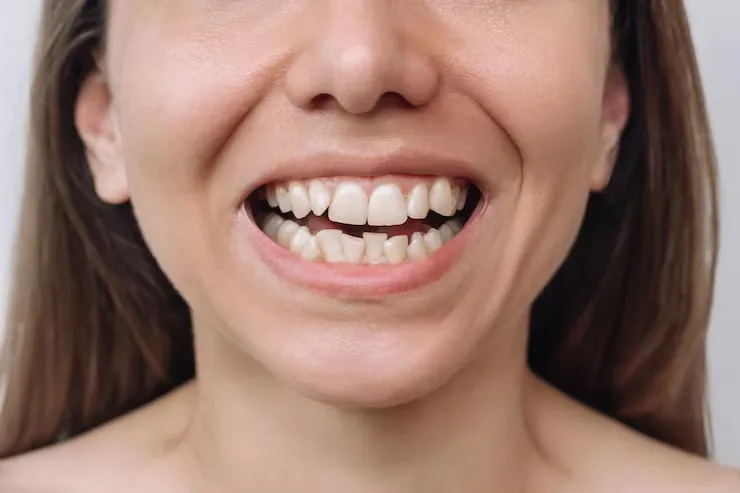
Open Bite
With an open bite, the front teeth do not meet when the back teeth are together, leaving a visible gap between upper and lower incisors. This is commonly associated with tongue thrusting habits or prolonged thumb sucking. An open bite forces chewing forces onto the back teeth only, accelerating wear and increasing the risk of posterior tooth fracture. Invisalign and other clear aligners can effectively treat many mild to moderate dental open bites in adults; more severe skeletal cases may require surgery.
Crossbite
In a crossbite, some upper teeth bite inside the lower teeth instead of outside. This can affect front teeth (anterior crossbite) or back teeth (posterior crossbite). Posterior crossbites often cause the jaw to shift laterally during closure, loading the TMJ unevenly and contributing to joint symptoms. Anterior crossbites not only affect appearance but also incisal function and can contribute to uneven wear.
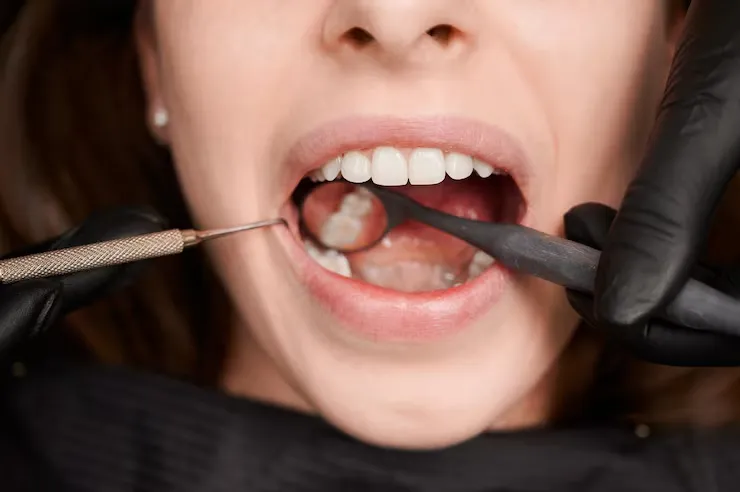
Worn Teeth (Attrition and Erosion)
Tooth wear is both a consequence of bite problems and a cause of further imbalance. Bruxism produces characteristic, often bilateral wear on front and back teeth. Acid erosion from diet or reflux thins enamel, making teeth more vulnerable to grinding damage. Once a significant vertical dimension is lost, full mouth rehabilitation may be needed to restore both function and aesthetics.

Temporomandibular Disorder (TMD)
TMD includes disorders of the TMJs, chewing muscles, or both. Symptoms can include clicking or popping, limited opening, jaw locking, earache, headaches, and facial muscle pain. Contributing factors often include bite imbalance, bruxism, stress, and joint inflammation. Management is typically conservative, first — splint therapy, exercises, physical therapy, and habit modification — with irreversible dental or surgical treatments reserved for selected cases.
How We Diagnose Bite Problems
At Dental Solutions Clinic in Indiranagar, Bangalore, diagnosis is comprehensive and carefully staged:
Dental and occlusal examination
Assessment of tooth contacts, wear patterns, mobility, jaw position at rest, and how the teeth meet during function.
TMJ and muscle assessment
Palpation of the TMJs and chewing muscles, measurement of comfortable opening (normally around 40–55 mm), and observation of any deviation, locking, or joint sounds.
Digital study models
Intraoral scanning with Planmeca Primescan to create 3D models for detailed analysis of your occlusion outside the mouth.
Photographic and video records
Extra-oral and intra-oral photographs and, where useful, video to document jaw symmetry, smile line, wear, and functional movements.
CBCT imaging was indicated
PLANMECA ProMax CBCT for TMJ bone assessment, condylar position, skeletal discrepancies, and complex restorative or surgical planning.
Diagnostic occlusal splint
A custom night guard worn for several weeks can both protect teeth and help clarify the diagnosis. If symptoms significantly improve with splint use, bite and muscle factors are likely major contributors.

How We Treat Bite Problems

Occlusal Splint Therapy — Often the First Step
An occlusal splint (night guard or stabilisation splint) is a custom-made acrylic appliance worn over the upper or lower teeth. It prevents direct tooth-to-tooth contact during clenching and grinding, redistributes forces more evenly, and allows the jaw muscles and joints to decompress. Splint therapy is a common first-line approach for bruxism-related wear and many TMD cases, and in some patients, it provides sufficient relief without further irreversible dental treatment.

Orthodontic Treatment — Correcting Tooth Position
When tooth alignment is the main cause of the bite problem, orthodontic treatment with Invisalign clear aligners or fixed braces, provided by Dr. Ramya, can reposition teeth into a more balanced occlusion. In adults with existing wear or restorations, orthodontics is often the first phase, followed by restorative treatment to rebuild worn surfaces once the bite is corrected.

Restorative Build-Up — Rebuilding Worn Teeth
Significant wear may require rebuilding lost tooth structure with composite resin, ceramic onlays, or full-coverage crowns, depending on the severity and location of the tooth. Complex bite reconstruction and full-mouth rehabilitation are planned using wax mock-ups and provisional restorations to test the new bite before definitive work is placed.
Frequently Asked Questions
How do I know if my bite is causing my headaches?
Bite or TMD-related headaches typically cause aching or tightness in the temples or jaw muscles, often worse in the morning due to nighttime clenching or after extended chewing. If you experience headaches along with jaw tenderness, clicking, stiffness, or tooth wear, a bite assessment is advised. Trying a diagnostic splint can be very helpful — if your headaches decrease while using it, your bite and muscle function may be key factors.
Can a bite problem cause a tooth fracture?
Yes. Teeth that receive heavy or premature contacts experience forces beyond their design limits, which, over time, can lead to cracks or fractures, particularly in back teeth and those with large fillings or root canal treatment. Identifying and adjusting the bite to remove these overloads is preferable to treating fractures after they occur.
Is jaw clicking always a sign of a bite problem?
Not always. TMJ clicking is relatively common and, if it is painless and stable, may not require active treatment. However, clicking, locking, reduced opening, or a change in your bite should be evaluated. Clinical and, where appropriate, CBCT assessment help determine whether joint changes are stable or progressive and whether the bite is part of the problem.
Will I need surgery for my bite problem?
Most bite problems, including many significant ones, can be managed non-surgically with a combination of splint therapy, orthodontics, and careful restorative treatment. Orthognathic (jaw) surgery is reserved for a minority of patients with severe skeletal discrepancies that cannot be corrected adequately with tooth movement alone. Your comprehensive assessment at Dental Solutions Clinic will clarify whether surgery is indicated in your case.
Can I fix my bite with Invisalign?
In many cases, yes. Invisalign can correct a wide range of dental malocclusions — including many overbites, open bites, crossbites, crowding, and spacing — especially when the underlying issue is tooth position rather than severe jaw discrepancy. The ClinCheck digital simulation shows how your upper and lower teeth are planned to move and what the final bite should look like. In more complex cases, clear aligners may be combined with restorative treatments, and in some severe skeletal cases, surgery may still be required.