
TMJ Disorder | causes and treatment in Bangalore
The temporomandibular joint (TMJ) is the small but powerful joint just in front of your ear that connects your lower jaw to your skull. It works every time you talk, chew, swallow, or yawn, so when its movement or the surrounding muscles are not working smoothly, you can feel pain not only in the jaw but also as headaches, ear pain, neck and shoulder tension, or jaw stiffness — often worse in the morning if you clench or grind at night.
At Dental Solutions Clinic in Indiranagar, Bangalore, TMJ and jaw pain are assessed and treated by Dr. Ramya Balasubramanya — MDS Prosthodontics, BDS Gold Medallist, Certified Digital Smile Design Practitioner and Certified Invisalign Provider — with specialist training in diagnosing bite problems, TMJ disorders, and restoring damaged teeth and joints.
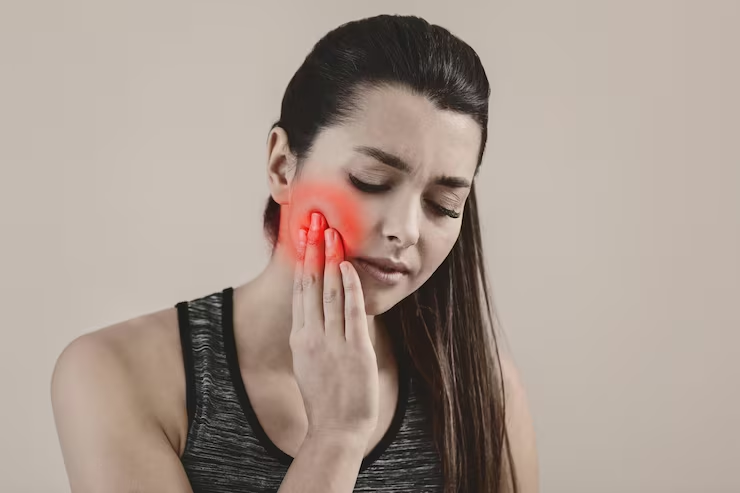
What is temporomandibular disorder (TMD)?
Temporomandibular disorder (TMD) is a broad term for conditions that cause pain or trouble moving the TMJ and the chewing muscles. These may include:
- Problems with the joint disc slipping out of place, causing clicking, catching, or locking
- Inflammation inside the joint, causing pain when you open or close it
- Wear and tear arthritis of the joint surfaces, leading to stiffness, grinding sounds, and bite changes
- Muscle problems such as jaw muscle tightness, fatigue, and trigger point pain
Many people have more than one of these issues at the same time, so determining which is dominant (muscle, disc, or joint‑structure-related) is essential before choosing treatment. For example, muscle‑driven TMD is managed differently from a true locking disc problem or from arthritic joint damage.
Common causes and risk factors

An uneven bite from missing teeth, worn teeth, or poorly fitting crowns can make one side of the jaw work harder, over‑loading that joint and the nearby muscles.
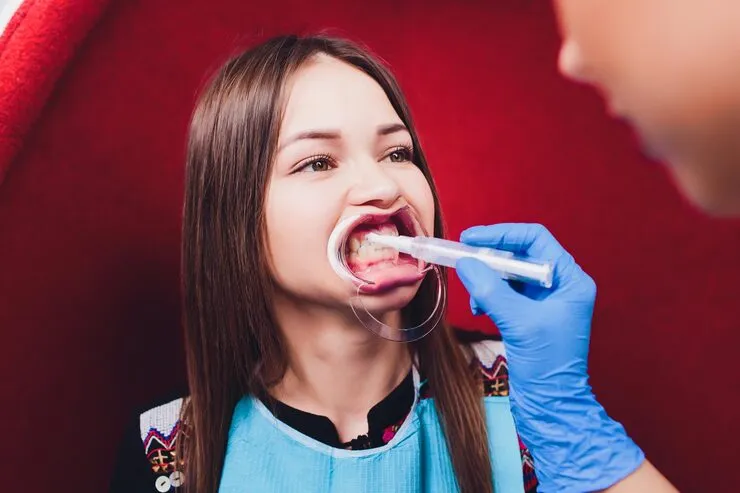
Habitual clenching or grinding, especially during sleep, puts much higher forces on the teeth, muscles, and joints than normal chewing and is strongly linked with TMD symptoms.

Stress and emotional load
Stress is closely associated with both bruxism and TMD; people under stress are much more likely to clench or grind unconsciously, which aggravates jaw and muscle pain.
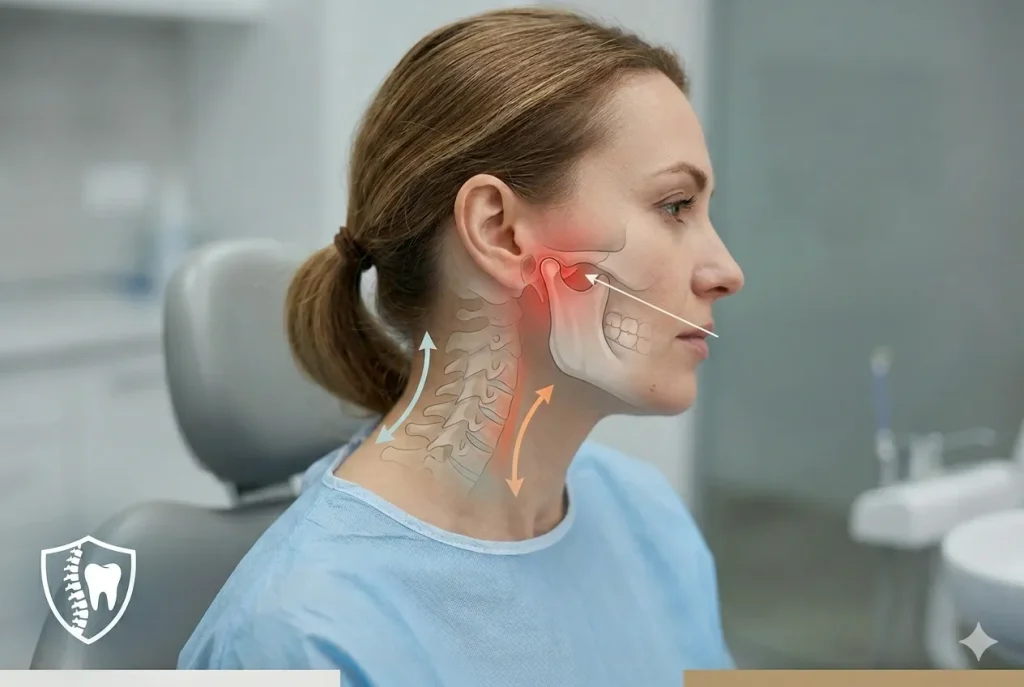
Jaw injury and whiplash
Direct blows to the jaw or indirect injuries such as whiplash can disturb the disc, bruise the joint, or strain the muscles and ligaments, leading to ongoing TMD symptoms.
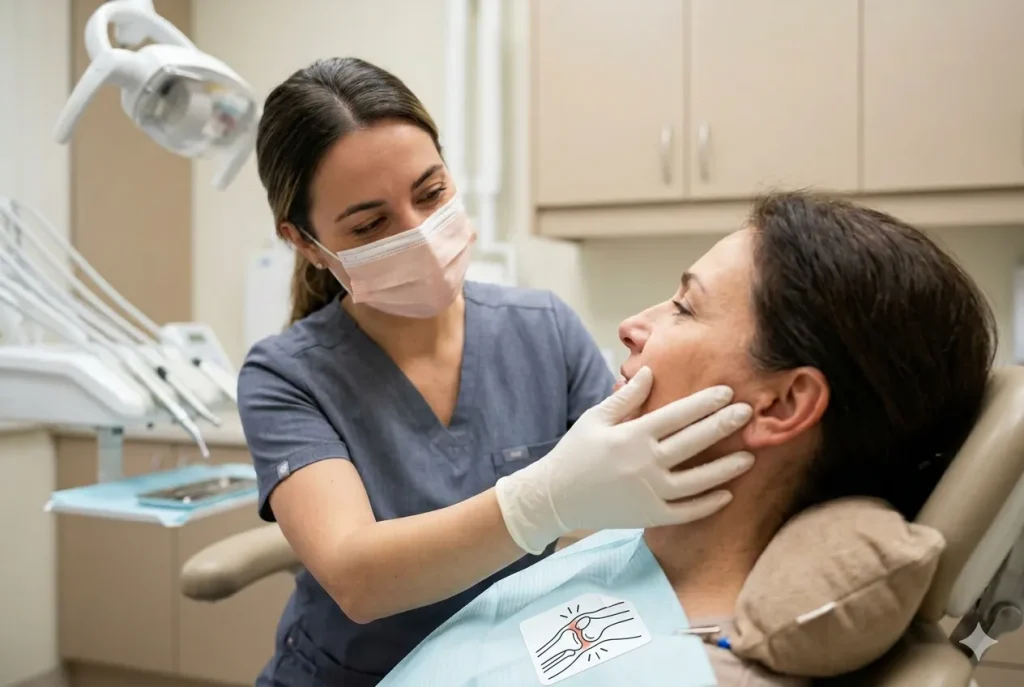
Joint hypermobility or arthritis
Some people have looser joints by nature or develop arthritis in the TMJ, both of which can cause instability, creaking or grinding sounds, and progressive changes to the bite.
When TMJ symptoms need urgent attention?
You should seek prompt assessment if you have:
- A jaw that suddenly locks open or closed and will not move normally
- Severe jaw joint pain or swelling after an injury
- Mouth opening that becomes more limited over a few days or weeks
- New, one sided facial swelling near the joint
A “closed lock” (very limited opening) and trauma‑related joint pain often need urgent examination and imaging to rule out a fracture or serious internal joint problem.
How we diagnose TMD at Dental Solutions Clinic
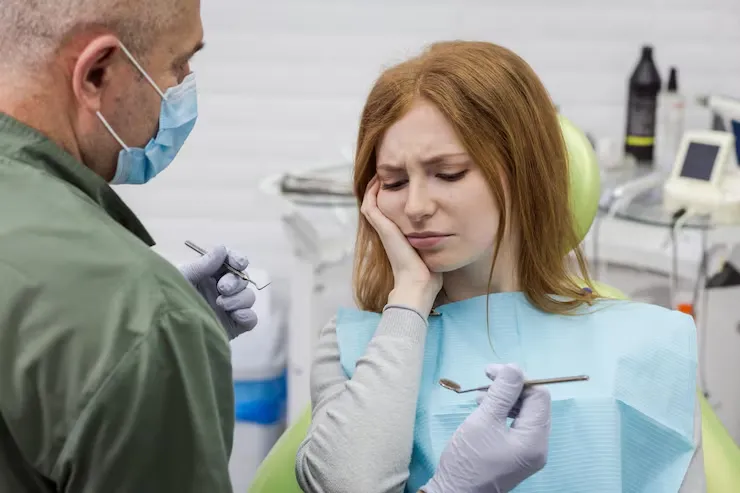
Diagnosis at Dental Solution Clinic is detailed and stepwise:
- Jaw and muscle examination -We feel (palpate) the jaw muscles and joints, check for tender spots, measure how wide you can open comfortably, and observe how the jaw moves and whether it clicks, pops, or grinds.
- Bite (occlusion) analysis – We use coloured marking paper to see where teeth hit first and where forces are concentrated, and to look at wear patterns that suggest clenching or grinding.
- Digital scans and models – Planmeca digital scans are used to create precise 3D models of your teeth and bite, which can be mounted on an articulator to study jaw movements in detail.
- X‑rays and 3D imaging – Digital X‑rays and, when needed, 3D CBCT scans help assess the jaw joints, rule out significant arthritis or structural damage, and review overall tooth and jaw alignment.
- Diagnostic splint trial – A custom stabilisation splint worn at night for several weeks both protects the teeth and helps confirm whether bite forces and bruxism are major drivers of your symptoms.
Treatment options for TMJ and jaw pain

Occlusal splint (night guard) — first line
A custom flat‑plane splint worn during sleep is often the first and safest treatment. It reduces clenching force, protects teeth from wear, and helps decompress the joint; many patients with muscle‑dominant TMD notice clear improvement within 4–8 weeks.

If specific high spots or an uneven bite are driving the problem, careful bite adjustment or, in some cases, orthodontic treatment (such as Invisalign or braces) may be recommended after symptoms are stabilised with a splint. This aims to create a more even, stable bite so muscles and joints are less strained.

Restorative rehabilitation for worn teeth
Where long‑term grinding or missing teeth have collapsed the bite, rebuilding worn teeth or replacing missing ones can help restore a healthier jaw position and reduce TMD load.
Botulinum toxin (Botox) for overactive muscles
For severe clenching with enlarged jaw muscles or persistent muscle pain not fully relieved by splints, small doses of botulinum toxin can reduce muscle strength and alleviate symptoms for several months, especially when combined with splinting.

Physiotherapy and stress management
Jaw‑focused physiotherapy, posture correction, and exercises for the neck and shoulders often complement dental treatment, especially when there is a strong muscle and posture component. Stress‑reduction strategies and, where appropriate, psychological support can also reduce clenching tendencies and improve long‑term control.
Frequently Asked Questions
What are common symptoms of TMJ/TMD?
Typical symptoms include jaw pain or stiffness, clicking or popping sounds, difficulty opening wide, headaches, ear pain or fullness, neck and shoulder tension, and teeth that do not feel like they fit together properly.
Is jaw clicking always a sign of a serious TMJ problem?
Not always. A painless, occasional click can be harmless, but clicking with pain, locking, or limited opening suggests a disc or joint problem that should be assessed.
Can stress really cause TMJ problems?
Yes. Stress increases the tendency to clench or grind your teeth, which overloads the jaw muscles and joints and is strongly linked to TMD symptoms. Stress management often forms part of effective TMJ treatment.
Do I need surgery for TMJ pain?
In most cases, no. TMJ disorders usually respond well to conservative treatments such as splints, physiotherapy, bite adjustments, medication, and lifestyle changes, and surgery is reserved for select severe or structural cases.
What does a TMJ splint (night guard) do?
A TMJ splint fits over your teeth to reduce clenching forces, protect teeth from wear, and help the jaw joints and muscles relax into a more stable position. Many patients notice less morning jaw pain and fewer headaches after several weeks of regular use.
How is TMJ/TMD diagnosed?
Diagnosis is based on your symptoms, a detailed jaw and muscle exam, bite analysis, and, when needed, imaging such as X‑rays or CBCT scans. This helps distinguish muscle‑dominant problems from disc issues or joint arthritis so that treatment can be targeted.
Can TMJ problems cause headaches and ear symptoms?
Yes. TMD is a recognised cause of tension‑type headaches and can also lead to ear pain, fullness, or ringing, even when the ears themselves are healthy. Many patients first seek help for “headaches” or “earache” before the jaw is identified as the source.
What can I do at home to ease TMJ pain?
In the short term, you can rest the jaw (avoid hard or chewy foods), use warm or cold packs, practice relaxed jaw posture, and do only gentle stretching as advised. However, persistent pain, locking, or bite changes should always be checked by a dentist or TMJ specialist.