
Endodontics – Root Canal Treatment & Laser Assisted RCT in Indiranagar, Bangalore
Many people still believe root canal treatment is very painful. In reality, this pain usually comes from the infected nerve inside the tooth, not from the treatment itself. Modern root canal therapy removes this inflamed tissue, and with good local anaesthesia, the procedure generally feels similar to getting a filling. Most fear stems from how the tooth felt before treatment, not from what you feel in the chair.
At Dental Solutions Clinic in Indiranagar, Bangalore, root canals are performed by Dr. Ramya Balasubramanya – MDS Prosthodontics, BDS Gold Medallist, Certified DSD Practitioner, Certified Invisalign Provider. She also offers laser assisted root canal treatment using the Fotona LightWalker Er:YAG laser, which helps clean and disinfect the root canal system more thoroughly than standard irrigation, especially in curved, complex, or previously treated canals.

What Is Endodontics?
Endodontics is the branch of dentistry that deals with problems of the tooth nerve (pulp) and the tissues around the root tip. In a root canal, the diseased pulp is removed, the canals are shaped and cleaned, and the empty space is filled and sealed with a biocompatible material; the tooth is then rebuilt, usually with a filling and, for back teeth, a crown.
The main goal is to save your natural tooth. Instead of extracting a painful or dead tooth, endodontic treatment lets it stay in place, so you keep the surrounding bone, contact with neighbouring teeth, and a stable bite. Whenever a tooth can sensibly be saved, this is usually better for your mouth and your budget than extraction and replacement.
Common Problems We Treat in in Endodontics

Irreversible Pulpitis (Severe Toothache)
- Deep decay or trauma has inflamed the pulp beyond repair.
- Symptoms include a throbbing, spontaneous pain that often worsens at night and sometimes radiates to the ear or jaw.
- Treatment involves root canal therapy to eliminate the inflamed pulp and seal the tooth, typically providing quick relief.
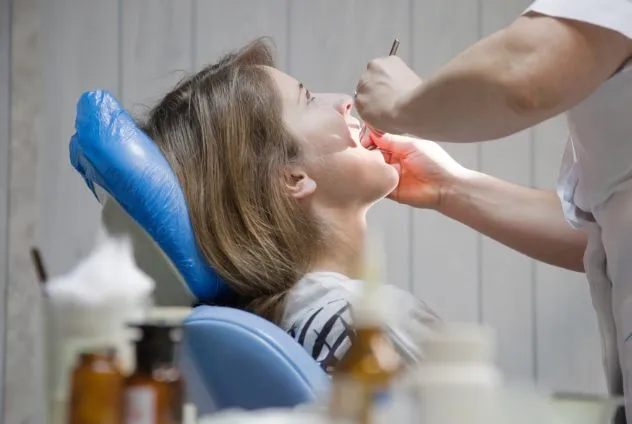
Pulp Death and periapical abscess
- An untreated inflamed pulp dies and becomes infected, and the infection spreads to the bone at the root tip.
- Symptoms include a dull, persistent ache, pain when biting, swelling, and occasionally a pus-filled “pimple” on the gum.
- If the root and bone are sound, the tooth is usually treated with RCT rather than extracted; the bone then heals over several months.
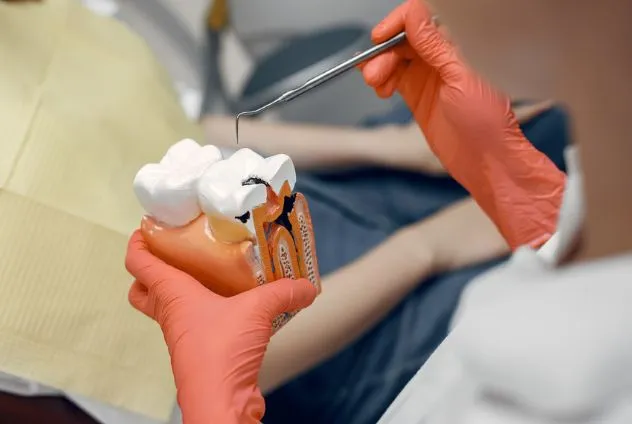
Pulp exposure from decay or fracture
- Decay or a break has opened directly into the pulp chamber.
- Small, clean exposures in young, vital teeth may be treated with direct pulp capping to avoid RCT.
- Most deep decay exposures or cases with symptoms still need full root canal treatment.
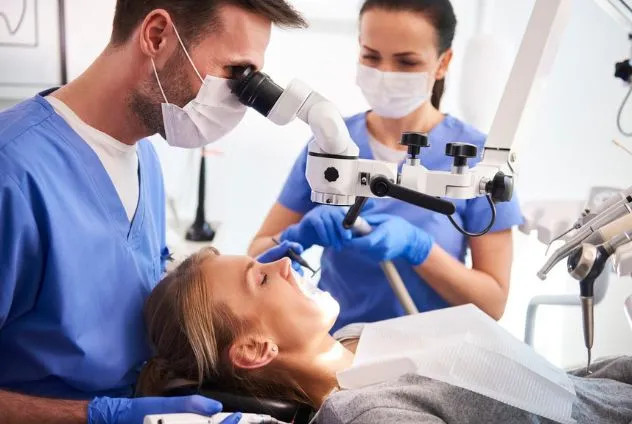
Calcified or difficult root canals
- Older teeth or previously treated teeth may have very narrow or blocked canals.
- At DSC, these are handled with flexible rotary nickel titanium files, warm vertical filling techniques, and laser assisted irrigation to improve cleaning of hard to reach areas.
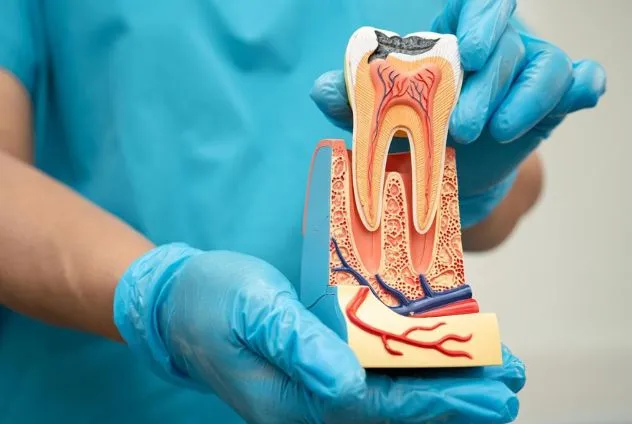
Root canal retreatment
- Sometimes an old root canal does not heal fully or becomes reinfected.
- Retreatment removes the old filling, re cleans and re shapes the canals (often with laser assisted disinfection), and seals them again.
- Each case is assessed to decide between retreatment, apicectomy, or extraction.
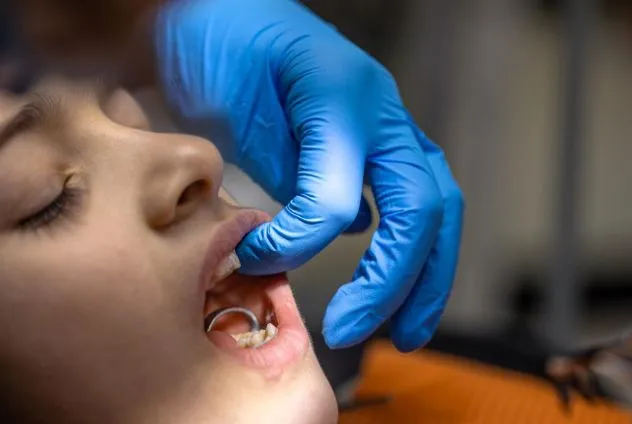
Apicectomy (surgical endodontics)
- Used when retreatment cannot be done or has not solved a persistent lesion.
- The tip of the root and the infected tissue are accessed through the gum, cleaned, and sealed from the end of the root.
Endodontic Treatments at DSC

Root Canal Treatment (RCT)
Removal of diseased pulp, shaping and cleaning of the canals, and sealing with gutta percha under local anaesthesia, often in a single visit.

Standard RCT enhanced with Fotona LightWalker Er:YAG laser activation to drive irrigants deeper into the canal system and dentinal tubules for better disinfection.


Direct pulp capping
Applying a calcium silicate material over a small, fresh pulp exposure in a healthy tooth to help it heal and avoid RCT in selected cases.

Placing a fibre post inside the treated root and building up a core when a large part of the tooth is missing, so it can support a crown safely.

Most back teeth that have had RCT are finished with a CAD/CAM ceramic crown designed and fitted by Dr. Ramya to protect against fracture and leakage.
Technology We Use
Fotona LightWalker Er:YAG laser
Activates the cleaning solution inside the canal to remove bacteria and debris from areas standard irrigation often misses.
RVG digital periapical X rays
Instant, low dose images at each stage of treatment to assess bone, roots, and filling quality.
Electronic apex locator
Helps measure canal length accurately and reduce the risk of over or underworking the canal.
Rotary NiTi file systems
Flexible machine driven files that shape canals efficiently and follow their natural curve.
Planmeca ProMax CBCT
3D scans for complex teeth with extra canals, resorption, or slow healing lesions, and for planning apicectomy.
CAD/CAM crowns post RCT
Digital scans and milled e.max or zirconia crowns for accurate, well sealed coverage soon after treatment.
Frequently Asked Questions
Is root canal treatment painful?
Root canal treatment is done under local anaesthesia, so you should not feel pain during the procedure — only pressure or vibration. In very inflamed teeth, it can take a little longer and an extra injection or two to get fully numb, and mild soreness for 24–48 hours afterwards is normal and usually managed with standard painkillers. Most of the severe pain patients remember is from the infection before treatment, not from the root canal itself.
How many appointments does a root canal take?
Most root canals at DSC are completed in a single visit, including full cleaning, laser-assisted irrigation, and canal filling. Two or more visits are only needed when the infection is severe, the root anatomy is unusually complex, or an acute abscess needs calming with medication inside the tooth before final sealing; you will be told at assessment whether your case is likely to be single or multi visit.
What is the success rate of root canal treatment?
Well performed root canal treatment has a high success rate, with studies reporting success in about 85–97% of cases when teeth are properly restored and reviewed. Teeth with existing bone infections at the root tip have a slightly lower success rate, but most of these lesions heal within 6–12 months, and enhanced disinfection methods, such as laser-assisted cleaning, can improve outcomes in complex or retreatment cases.
Do I need a crown after root canal treatment?
For most back teeth, yes. Root canal treated premolars and molars are more brittle and often already heavily damaged, so a crown is strongly recommended to prevent cracks and fractures. Some front teeth with minimal structural loss and lighter bite forces may be restored without a crown, and this decision is made on a case-by-case basis after assessing how much healthy tooth remains.
What is the difference between root canal treatment and extraction?
Root canal treatment cleans and seals the inside of the tooth so you can keep it, preserving bone, tooth position, and your bite; extraction removes the tooth completely and usually requires later replacement with an implant, bridge, or denture. In most restorable teeth, saving the tooth with RCT and a crown is simpler and more cost effective than extraction plus replacement, so extraction is reserved for teeth that cannot be predictably treated or restored.