
Pediatric Dentistry – Children’s Dental Care in Indiranagar, Bangalore
A child’s early visits to the dentist strongly influence how they feel about dental care as adults. The main goal is to create a calm, positive experience before any major treatment is needed, so problems are not delayed by fear later in life.
At Dental Solutions Clinic in Indiranagar, Bangalore, children and teenagers are treated by Dr. Ramya Balasubramanya – MDS Prosthodontics, BDS Gold Medallist, Certified Invisalign Provider – and Dr. Balasubramanya K V – MDS Periodontics, LANAP Certified Practitioner, Fotona LightWalker Certified Operator. Dr Ramya looks after routine checkups, decay prevention, fillings, and early orthodontic assessments, while Dr Balasubramanya performs tongue-tie and lip-tie treatments using the Fotona LightWalker laser, a quick, suture-free option well-suited for children and infants.

What Is Pediatric Dentistry?
Pediatric dentistry provides full dental care for children from infancy through their teenage years. It includes care for baby and permanent teeth, early decay control, fluoride and sealants, monitoring of tooth and jaw growth, early orthodontic screening, and management of dental injuries.
Common Problems We Treat
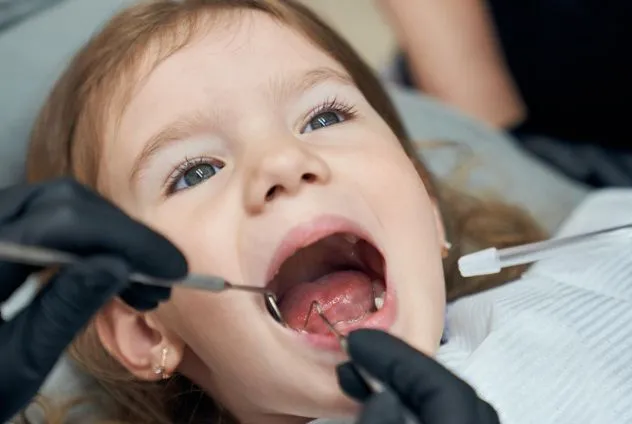
Early childhood caries (decay in baby teeth)
- Baby tooth decay is common and can cause pain, infection, and early loss of teeth.
- Baby molars keep space for future permanent teeth; if they are lost too soon, nearby teeth drift and crowding often follows.

Gum health and brushing habits
- Children can develop red, swollen gums from plaque build up (gingivitis), which can be reversed with good cleaning.
- Check ups include gentle cleaning where needed, brushing demonstrations for both child and parent, and diet advice to reduce sugary snacks and drinks.

Tooth eruption and jaw growth
- We monitor when and where teeth appear, check for crowding or spacing, and look for habits like thumb sucking, mouth breathing, or tongue thrusting.
- Missing or impacted permanent teeth can often be spotted early, and developing bite problems at ages 7–10 can be managed with simple interceptive steps instead of complex treatment later.

Dental trauma (injuries to teeth)
- Falls and sports injuries frequently damage front teeth in children.
- DSC provides immediate care: splints for loose teeth, repositioning for moved teeth, re implantation and splinting of knocked out permanent teeth where possible, and composite repairs for broken edges.
- Parents are taught basic first aid, such as keeping a knocked out tooth moist in milk and getting to a dentist quickly.
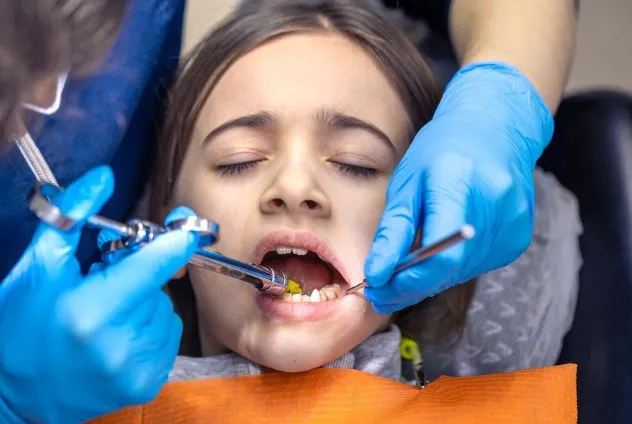
Tongue tie and lip tie
- A tight tongue tie can affect breastfeeding, speech, swallowing, and sleep; a strong upper lip tie can contribute to a gap between the front teeth and affect lip seal.
- At DSC, Dr. Balasubramanya uses the Fotona LightWalker Er:YAG laser to release tongue ties and lip ties from infancy through adolescence, with minimal bleeding, no stitches in most cases, and faster healing than scalpel surgery.
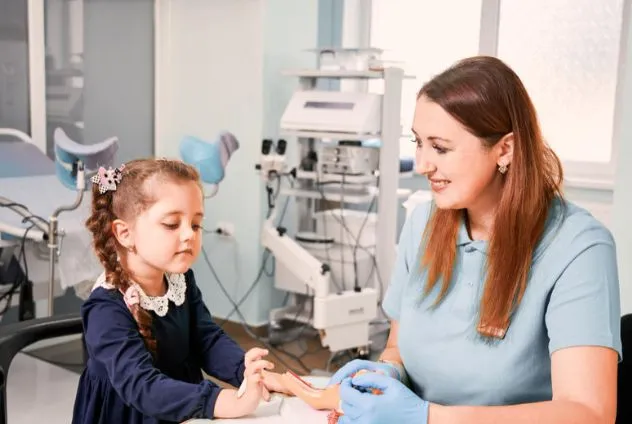
Early orthodontic checks and interceptive care
- Orthodontic experts advise a child's first orthodontic evaluation around age 7, when the front teeth and first permanent molars have emerged.
- At DSC, early assessment allows for space maintainers, simple arch expansion, and habit breaking appliances when needed.
- Full braces or Invisalign are usually planned later, around 11–13 years, once most permanent teeth are present.
Pediatric Treatments at DSC

Pediatric examination
Full check of teeth, gums, eruption patterns, bite, and early orthodontic issues.

Fissure sealants
Protective resin coatings on the deep grooves of new permanent molars to greatly reduce the risk of decay.

Fluoride varnish
High strength fluoride is painted on teeth to harden enamel and help reverse early decay in higher risk children.

Tooth coloured fillings
Composite fillings for cavities in baby and adult teeth, placed conservatively to protect the remaining healthy tooth.

Pulpotomy for baby molars
Partial nerve treatment for badly decayed baby molars, followed by a stainless steel crown to keep the tooth until the permanent tooth is ready.

Laser frenectomy
Quick, minimally bleeding laser release of tongue tie or lip tie, usually without stitches.

Space maintainers
Fixed or removable devices that hold space after an early tooth loss so the permanent tooth can erupt correctly.

Dental trauma care
Immediate treatment for broken, loose, moved, or knocked out teeth and careful follow up to monitor healing.

Early orthodontic screening and interceptive care
Checks at 7–10 years for developing bite and spacing issues, with simple appliances where indicated.

Custom sports mouthguards
Mouthguards made from digital scans for a snug fit and better protection during contact sports.
Technology We Use with Children
Fotona LightWalker Er:YAG laser
Used for tongue tie and lip tie release with minimal bleeding, no sutures in most cases, and fast healing, so infants can often feed again soon after the procedure.
Child size RVG digital X rays
Small sensors and quick exposures to detect decay between back teeth with low radiation and minimal fuss.
DIAGNOdent laser decay detection
A small laser device that finds early fissure decay in new molars without poking or X rays, ideal for planning sealants.
Planmeca Primescan intraoral scanner
A handheld scanner that replaces messy impressions for models, mouthguards, and appliances, making visits easier for children who gag with trays.
Intraoral photography
Clear pictures of teeth and bite to track changes and help children and parents understand what is happening in the mouth.
Frequently Asked Questions
When should my child first visit the dentist?
Your child should see a dentist when the first tooth appears or by their first birthday, whichever comes first. This early visit focuses on checking tooth eruption, assessing decay risk, guiding parents on cleaning and diet, and helping your child see dental visits as a normal, positive part of life.
My child is scared of the dentist. How do you manage this?
Fear is common in children, and we manage it with time, honesty, and gradual steps rather than rushing. At DSC, the first visit for an anxious child may simply involve sitting in the chair, meeting the dentist, and looking at instruments, with treatment introduced slowly using “tell show do”, praise, and calm voice control; for children with severe anxiety who cannot cope with treatment, options such as conscious sedation or treatment under general anaesthesia can be discussed.
Do baby teeth need to be filled if they will fall out anyway?
Yes. Baby teeth help your child chew, speak clearly, and, importantly, hold space for the adult teeth growing underneath; untreated decay or early loss can cause pain, infection, and space loss, leading to crowding and later orthodontic treatment. Filling decayed baby teeth keeps them healthy until they naturally fall out and protects the permanent teeth developing below.
At what age should I bring my child for an orthodontic assessment?
Around age 7 is ideal for a first orthodontic check, when the front teeth and first permanent molars have usually erupted. This early visit is mainly for assessment, not starting braces, and allows problems such as crossbites, crowding, impacted canines, or habit related issues to be spotted early and managed with simple interceptive measures before full treatment (braces or Invisalign) is considered around ages 11–13.
Is laser frenectomy safe for infants?
Yes. Er:YAG laser frenectomy is well suited to infants because it removes the tight tissue precisely with minimal heat spread to surrounding areas, unlike some other surgical methods. The procedure is typically completed in a couple of minutes, with little bleeding, no stitches, and babies are usually able to feed soon after; parents are shown gentle stretching exercises to help prevent the frenum from reattaching during healing.