Full Mouth Rehabilitation — Complete Oral Reconstruction in Bangalore
Full mouth rehabilitation is not a single procedure; it is a structured, stepwise plan to restore most or all of your teeth so that you can chew comfortably, protect your jaw joints, and feel confident about your smile again. It typically combines crowns, bridges, implants, and bite correction across both arches and is one of the most technically demanding areas of restorative dentistry.
Patients requiring this treatment often face long-term problems such as severe tooth wear from grinding, multiple missing or broken teeth, failed restorations, bite collapse, and persistent jaw or muscle pain.
At Dental Solutions Clinic in Indiranagar, Bangalore, complex cases that haven’t responded to other treatments are managed by specialist Prosthodontist Dr. Ramya Balasubramanya — who holds an MDS in Prosthodontics, is a BDS Gold Medallist, and is certified in Digital Smile Design (DSD) and Invisalign. She uses a comprehensive digital planning and mock-up process before undertaking any irreversible procedures.
What Is Full Mouth Rehabilitation?
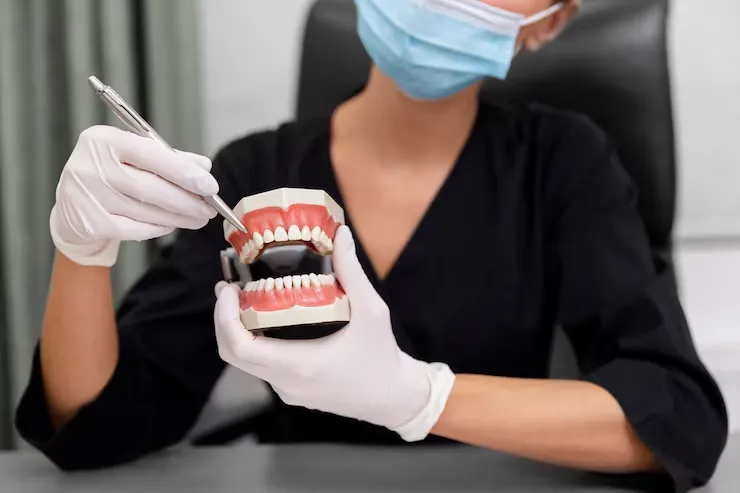
Full mouth rehabilitation (also called full mouth reconstruction) is a comprehensive rebuilding of all or most teeth in one or both jaws, using a sequence of treatments such as crowns, onlays, veneers, implants, periodontal therapy, and, where needed, orthodontics. The aim is to restore a stable bite, comfortable function, and a healthy, aesthetic smile.
Unlike a cosmetic “smile makeover” that focuses mainly on the front teeth, full mouth rehabilitation addresses the entire bite: the back teeth that do most of the chewing, the vertical dimension (how far apart the jaws are when the teeth meet), and jaw joint health. Prosthodontics, the specialist discipline of complex tooth restoration and occlusion, sits at the centre of this planning; periodontal, endodontic, surgical, and orthodontic procedures are built around the prosthodontic plan.
Who Typically Needs Full Mouth Rehabilitation?
Full-mouth rehabilitation is indicated when treating individual teeth in isolation will not resolve the overall problem. Common scenarios include:
- Severe tooth wear from bruxism – teeth shortened and flattened by grinding, often with sensitivity, collapsed bite, and jaw muscle or TMJ pain.
- Multiple missing teeth – partial or near-complete tooth loss causing drifting, over eruption, bone loss, bite change, and facial shortening.
- Failed or failing dentistry – multiple broken crowns, large failing fillings, recurrent decay, and temporary work that was never definitively completed.
- Bite collapse and vertical dimension loss – overclosed lower face, chewing discomfort, and joint or muscle symptoms from long-term loss of tooth support.
- Developmental or congenital conditions – such as dentinogenesis imperfecta, amelogenesis imperfecta, or severe hypodontia, where many teeth are structurally compromised or never developed.
If your teeth feel worn out, you struggle to chew comfortably, or you have “tried everything” without lasting success, you may be a candidate for a coordinated full mouth plan rather than piecemeal treatment.
Who Typically Needs Full Mouth Rehabilitation?
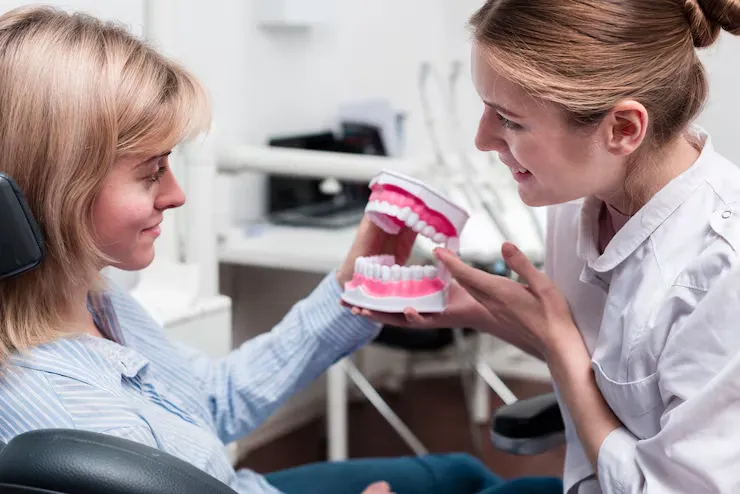
Careful planning is the foundation for predictable full-mouth reconstruction. At Dental Solutions Clinic, the diagnostic phase typically includes:
Radiographs and CBCT
Full-mouth X-rays and, where needed, PLANMECA ProMax CBCT for 3D assessment of bone, roots, implants, and TMJ.
Digital intraoral scans
Planmeca Primescan scans to create precise 3D models of your teeth and bite without traditional impressions.
Photographs and videos
Extra oral and intra oral images for DSD analysis of tooth shape, smile line, gum levels, and facial proportions.
Mounted models and jaw records
Facebow and bite records to reproduce your jaw movements accurately on an articulator.
TMJ and muscle evaluation
Assessment of jaw joints, range of motion, and muscle tenderness, particularly in bruxism and TMD cases.
Medical review
Conditions such as diabetes, osteoporosis, and medication history (e.g., bisphosphonates, anticoagulants) are factored into timing and sequencing.
Digital Smile Design & Wax-Up
All this information feeds into a Digital Smile Design and full-arch wax-up. Dr. Ramya designs your new tooth proportions and bite digitally and then has this translated into a physical wax model. From this, a provisional “trial smile” is created and placed over your existing teeth in a reversible way so you can see and feel the proposed outcome before any permanent tooth preparation.
If your teeth feel worn out, you struggle to chew comfortably, or you have “tried everything” without lasting success, you may be a candidate for a coordinated full mouth plan rather than piecemeal treatment.
The Full Mouth Rehabilitation Process — Phase by Phase
While every case is customised, most full mouth rehabilitations follow this broad sequence:

Comprehensive assessment & planning
All records are gathered and analysed; a written plan with phases, timeline, and fees is presented and discussed in detail.
Disease control
Active gum disease is treated (scaling, root planing, laser therapy where needed), and required root canal treatments are completed. Teeth that cannot be predictably saved are identified for extraction.
Surgical and implant preparation (where required)
Extractions, socket preservation, bone grafting, sinus lifts, crown lengthening, and implant placement are performed in a planned sequence using CBCT-guided protocols. Healing periods of several months may be required before loading implants.
Provisionalisation — the “trial rehabilitation”
Provisional crowns, bridges, and temporary implant restorations are placed across the treated arches based on the wax-up. These provisionals test the new vertical dimension, bite, appearance, and speech over several weeks, allowing adjustments before final ceramics are made.
Definitive restorations
Once provisionals are stable and approved, final zirconia and/or e.max ceramic crowns, onlays, veneers, bridges, and implant prosthetics are designed from updated digital scans and fabricated with CAD/CAM precision. The final restorations replicate the successful provisional design.
Maintenance and review
After completion, a tailored maintenance schedule (typically 3–6 monthly hygiene visits, periodic radiographs, and regular splint use for bruxers) helps protect your investment long-term.
Possible Components of a Full Mouth Rehabilitation
Depending on your diagnosis, your plan may include some or many of the following:
- Ceramic crowns (zirconia / e.max) and onlays
- Veneers and fixed bridges
- Root canal treatment (including laser-assisted RCT)
- Dental implants and full-arch implant prostheses
- Bone grafting, sinus augmentation, socket preservation
- Crown lengthening and gum contouring
- Periodontal therapy (scaling, root planing, LANAP/WPT laser)
- Invisalign or limited orthodontics for bite correction
- Occlusal splints (night guards) and TMD splint therapy
- Teeth whitening and minor composite bonding, where appropriate
Results, Timeline & Recovery
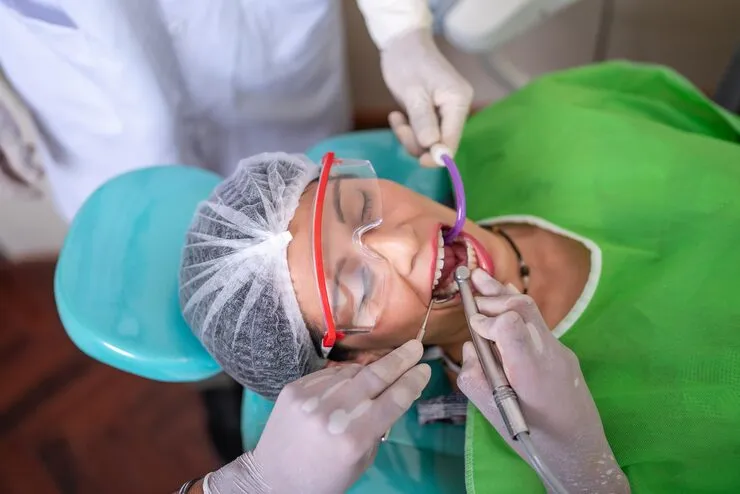
Function
The core goal is a stable, comfortable bite that lets you chew confidently on both sides without pain or repeated breakage. Patients with long-standing bite collapse and bruxism typically notice major improvements in comfort and chewing options once the new bite and splint therapy are in place.
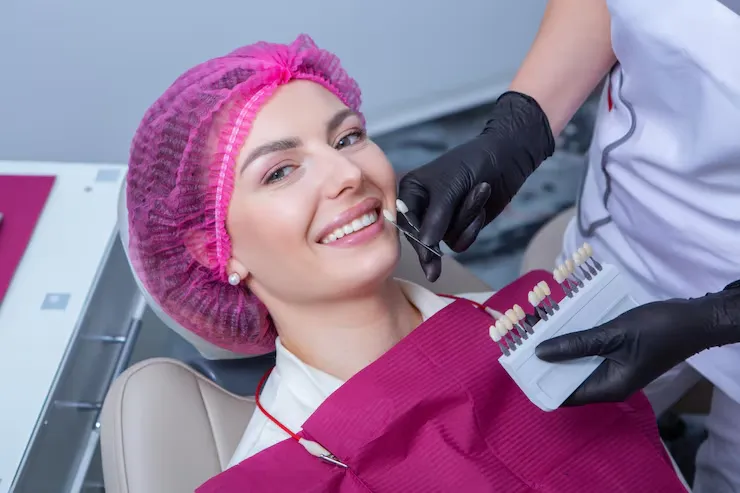
Aesthetics
Aesthetic changes are planned from the outset using DSD and trial provisionals, but they are always built on a stable functional design. The final ceramics reproduce the approved provisional smile in shape, length, and shade.

Timeline
Treatment duration varies widely:
- Simpler rehab (many crowns, minimal surgery): often 3–6 months.
- Complex rehab (implants with grafting, extensive disease control): often 9–18 months.
- You will receive a phased, realistic timeline at the planning appointment.
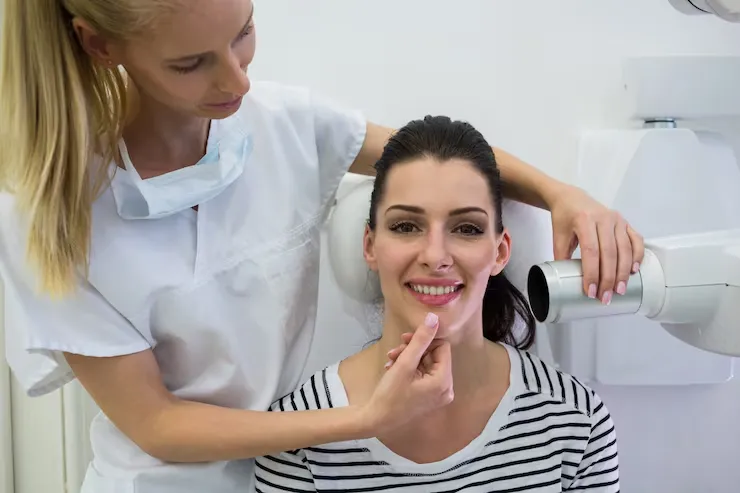
Recovery
- Surgical phases (extractions, grafts, implants) require a few days of soft diet and standard post-operative care.
- Provisional and final fitting phases are usually well tolerated, with minimal downtime.
- Total chair time is spread across multiple shorter visits where possible.
Why Choose Dental Solutions Clinic for Full Mouth Rehabilitation?

Specialist-led planning
Full mouth cases are led by Prosthodontist Dr. Ramya Balasubramanya, whose specialist training focuses specifically on complex multi-tooth reconstruction and occlusal management.

Integrated surgical care
Dr. Balasubramanya K V provides all gum and implant surgery in-house, working to a shared plan and shared CBCT data.

Digital, mock-up first approach
Every case is digitally designed (DSD, Primescan) and tested in provisional form before final restorations are made. No guesswork, no “surprises” at the end.

In-house CAD/CAM ceramics
Zirconia and e.max restorations are designed and fabricated with a fully digital workflow for precise fit and predictable results.

Complete range of supporting procedures under one roof
From laser periodontal therapy and microscopic RCT to implants, orthodontics, and TMD care, all key phases are coordinated within a single clinic.
If you have multiple failing teeth, long-standing jaw or bite problems, or have been told your case is “too complex”, a full mouth rehabilitation consultation at Dental Solutions Clinic in Indiranagar, Bangalore can clarify your options and map out a staged, realistic path back to comfort and confidence.
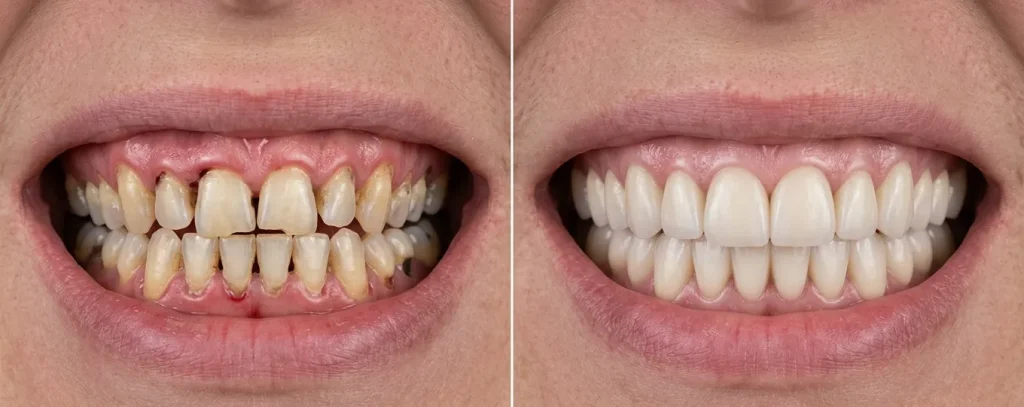
Full Mouth Rehabilitation Before & After Results
Seeing real cases helps to understand what a full mouth reconstruction can achieve in terms of chewing comfort, facial support, and smile aesthetics. These are real clinical cases from Dental Solutions Clinic — not stock images or manufacturer-supplied photographs.
Full Mouth Rehabilitation Cost in Bangalore
Full-mouth rehabilitation costs vary significantly based on the number of teeth, the materials selected, and whether implants, bone grafting, or periodontal treatment is required. A detailed itemised quote is provided after your initial diagnostic appointment.
At Dental Solutions Clinic in Indiranagar, typical guideline ranges are:

Full Mouth Rehabilitation (crown-based, both arches)
₹4,00,000 – ₹8,00,000

Full Mouth Implant Rehabilitation (both arches)
₹6,00,000 – ₹15,00,000

Frequently Asked Questions
How long does full mouth rehabilitation take?
It depends on complexity. Simple cases (mainly crowns, no implants) often take about 3–5 months to complete. Plans with several implants and gum treatment usually take 6–10 months. Very complex cases with full-arch implants and major grafting can take 12–18 months. You’ll receive a phased timeline and cost estimate after full evaluation.
Is full mouth rehabilitation painful?
Treatment is done under local anaesthesia, so the procedures themselves are not painful. After surgical procedures (extractions, implants, grafts), discomfort is usually well-controlled with medication and resolves within a few days. Restorative visits (for crowns and provisionals) are typically comfortable, and most patients report less overall pain once the provisional phase is in place than before treatment.
Do I have to do everything at once?
No. Full mouth rehabilitation is always carried out in planned phases over multiple visits, not in a single session. Some scheduling flexibility is possible, but key steps must stay in order: disease control first, then provisionalisation, then final restorations, and implants must heal before they are loaded. Skipping phases or rushing the sequence compromises results.
Will my bite feel different afterwards?
Often yes — by design. If you start with a collapsed or unbalanced bite, the goal is to correct it so the new bite feels different but more stable. The provisional phase lets you test and adapt to the new bite and jaw position over weeks in a reversible way, so by the time final restorations are fitted, it feels natural and comfortable.
Will I be without teeth during treatment?
No. You do not leave the clinic without teeth. Provisional crowns and bridges are placed immediately after tooth preparation, so you can eat, speak, and smile throughout treatment (with some dietary precautions). During the implant phases, temporary solutions are planned to meet healing requirements, so your appearance and basic function are maintained.