
Dental bridge in Bangalore | Fixed tooth replacement at Dental Solutions Clinic, Indiranagar
Missing a tooth and tired of hiding your smile or chewing on one side? A dental bridge lets you close the gap with a fixed, natural‑looking tooth that stays in place and feels like it has always been there.
At DSC, all bridges are planned and fitted by Dr. Ramya D S (MDS Prosthodontist, BDS Gold Medallist). Each bridge is designed from a digital scan and milled from zirconia ceramic using CAD/CAM technology, providing a precise fit, a natural look, and a long service life.

What Is a Dental Bridge?
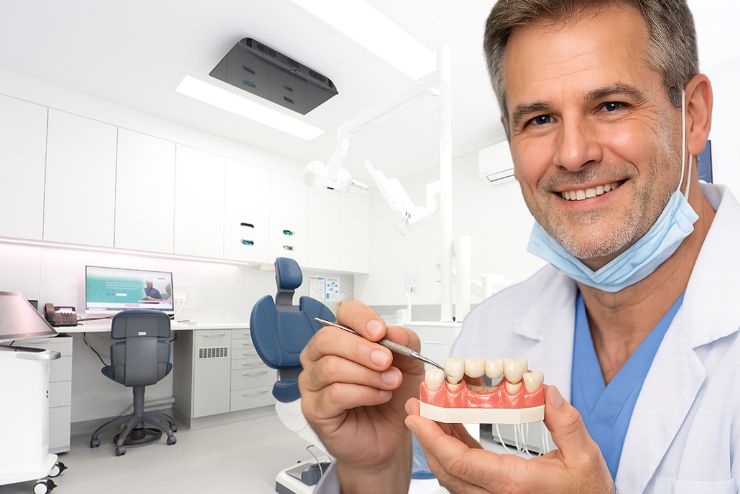
A dental bridge replaces missing teeth by “bridging” the space. It consists of one or more artificial teeth (called pontics) held in place by crowns cemented onto the natural teeth on either side of the gap (called abutment teeth).
The bridge is a single, fixed unit. Once cemented, it functions like natural teeth so that you can eat, speak, and smile normally. It does not move or need to be taken out.
The trade-off is that the abutment teeth must be prepared (reduced in size) to accommodate the crowns that anchor the bridge. This removes healthy tooth structure. For most gap sites, a dental implant that does not affect adjacent teeth is the preferred long-term option. But where implants are not possible or not preferred, a bridge is the next-best fixed solution.
Types of Dental Bridges
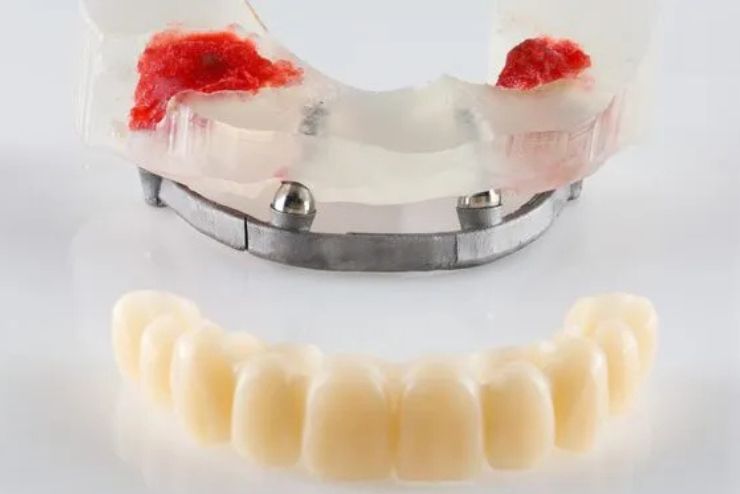
Traditional fixed bridge (most common)
Two crowns on the teeth, either side of the gap, connected by one or more pontics in between and used for single-tooth and two-tooth gaps. The abutment teeth are prepared, and the bridge is cemented in one fixed unit.
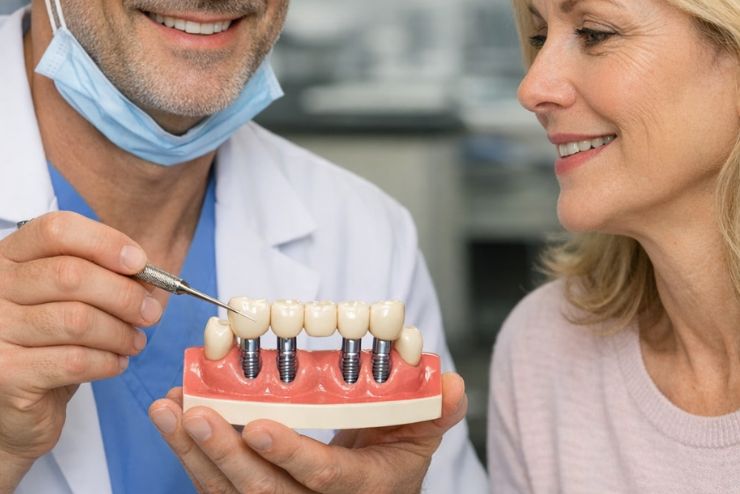
Implant supported bridge (best for multiple missing teeth)
Instead of using natural teeth as anchors, the bridge is supported by dental implants. No adjacent teeth are touched. This is the strongest, most durable option for replacing multiple consecutive missing teeth.
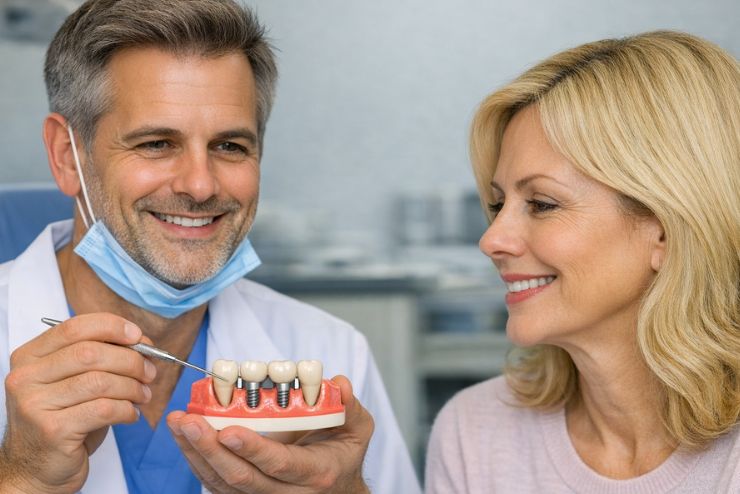
Maryland (resin bonded) bridge – conservative option
A minimal-preparation bridge where the pontic is held by metal or ceramic wings bonded to the back surfaces of the adjacent teeth, with no full crowns required. Appropriate for replacing single front teeth where the adjacent teeth are healthy, and the bite forces are low. More conservative but less durable than a traditional fixed bridge.
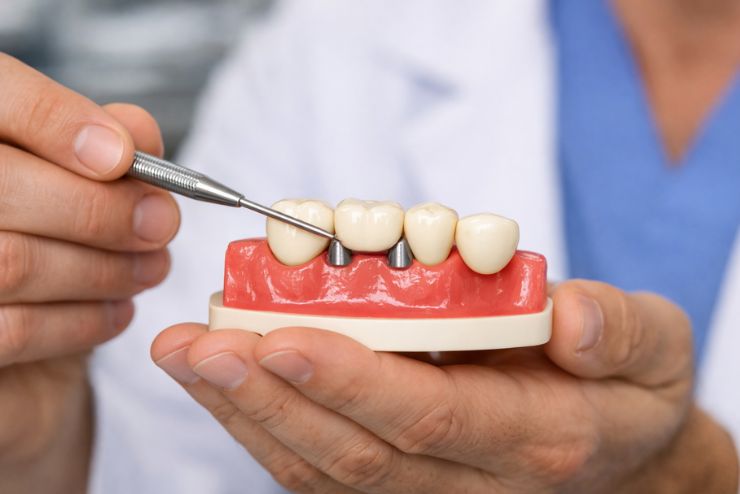
Cantilever bridge – one sided support
A bridge anchored to a crown on only one side of the gap. Less common. Used in specific situations where only one adjacent tooth is available. Places higher stress on the single abutment tooth.
Who Is A Dental Bridge For?
A dental bridge may be recommended if you:
- Have one or two neighbouring missing teeth, and implants are not possible, not preferred, or must be delayed.
- Already need crowns on the teeth next to the gap, so the bridge preparation serves both purposes.
- Want a fixed (non‑removable) solution but cannot have, or are not ready for, implants.
- Have insufficient bone for implants and do not wish to have bone grafting.
- Need a medium‑term fixed solution while planning future implant treatment.
Bridges vs implants – which should you choose?
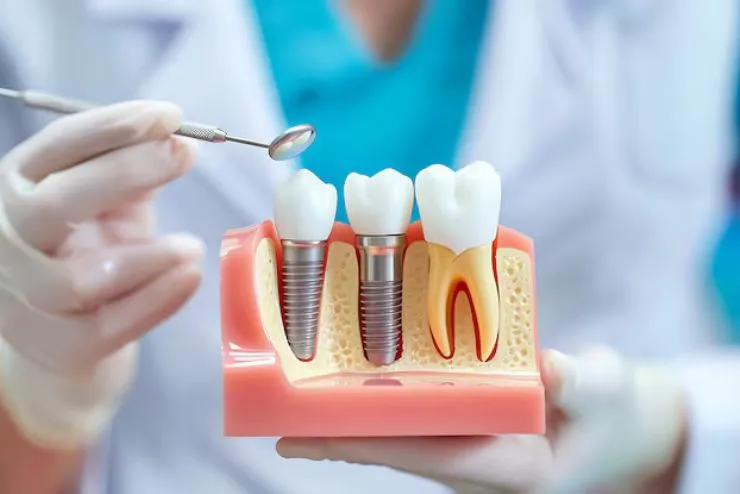
Implant: Replaces the tooth root, helps preserve jawbone, and does not involve adjacent teeth. Implant‑supported crowns and bridges generally have very good long‑term survival and lower cumulative complication rates.

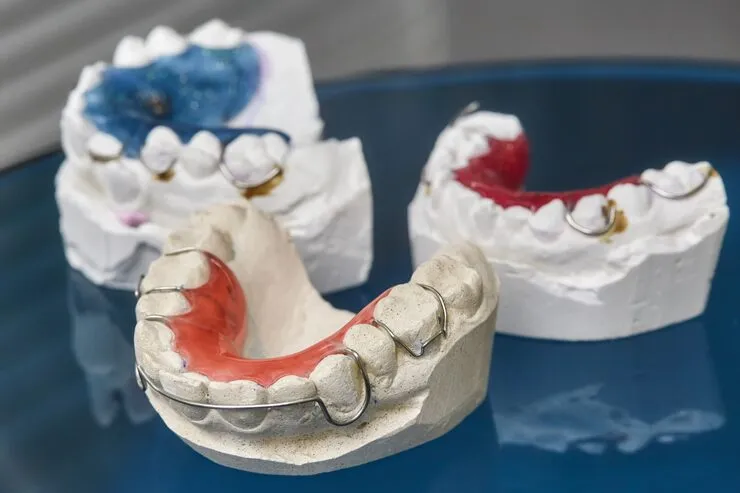
Bridge: Uses neighbouring teeth for support, does not stop bone shrinkage under the gap, and requires removal of healthy tooth structure on abutment teeth.
At DSC, you will always be shown both options. Dr. Ramya Balasubramanya will outline which choice best fits your mouth, health, and budget, not just which is easier to provide.
The procedure — Step by Step

Assessment and planning
The gap, neighbouring teeth, and bite are examined. Digital X‑rays check the roots and bone support of the proposed abutment teeth; a CBCT scan may be advised if implants are also being considered. All replacement options, bridge, implant, or leaving the space, are discussed before you decide.

Tooth preparation
The abutment teeth on either side of the gap are gently reshaped under local anaesthetic. A thin layer of enamel is removed to create space for the bridge crowns. The chosen ceramic and design determine the amount removed.

Digital impression
A 3D digital scan is taken with an intraoral scanner (no trays or putty). The scan captures the prepared teeth, the gap, and the opposing arch so the lab can design a precise CAD/CAM bridge.

Temporary bridge
A temporary bridge is fitted the same day to protect the prepared teeth, keep your smile complete, and maintain your bite while the final bridge is made. Lab time is usually around 2 weeks.

Bridge fitting and cementation
At the fitting visit, the permanent bridge is tried in. Fit, bite, contact points, and shade are checked and adjusted as needed. Once both you and Dr. Ramya are happy, the bridge is cemented with a long‑term resin cement, and the bite is re‑checked. The visit typically takes 45–60 minutes.
Recovery and Aftercare

After tooth preparation (with a temporary bridge)
- Mild sensitivity to cold or pressure is common and usually settles; sensitive‑toothpaste and ibuprofen help if needed.
- Avoid very hard, sticky, or crunchy foods that might loosen the temporary.
- Brush gently around the temporary; slide floss out through the side, not up, to avoid dislodging it.
After the permanent bridge fitting
- Mild sensitivity for a few days is normal while the tooth settles and the cement fully sets.
- You can usually return to a normal diet from Day 2, but try to avoid very sticky foods for the first week.
- Clean around and under the bridge with a floss threader or interdental brush. Pass the floss under the pontic to clean the gum surface beneath the bridge. This area traps food if not cleaned daily.
- Standard toothbrushing twice daily. Use a non-abrasive toothpaste.
- Visit DSC every 6 months. The bridge margins and gum health around the abutment teeth are checked at each visit.
Bridges last longest when the gums and supporting teeth stay healthy. Daily cleaning under the pontic is essential, not optional.
Dental Bridge Cost in Bangalore
Bridge cost depends on the number of units (each crown or pontic is one unit) and the material used. A 3-unit bridge (Zirconia) costs ₹25,000 – ₹45,000.
Your written treatment plan includes the full itemised cost before any tooth preparation begins.
Frequently Asked Questions
How is a bridge different from a denture?
A bridge is fixed in place, cemented onto neighbouring teeth, and does not come out, while a denture is removable and sits on the gums. A bridge feels more like natural teeth but requires preparation of the adjacent teeth; a denture does not.
Will the bridge look natural?
Yes. Bridges at DSC are made from zirconia ceramics, which closely copy the colour and translucency of real teeth. Shade, surface texture, and translucency are matched chairside so the bridge blends with your smile.
Can I eat normally with a bridge?
Once the permanent bridge is cemented, you can chew normally on that side. For the first few days, avoid very hard or sticky foods while the cement sets, then you can return to your usual diet.
Do I need special cleaning for a bridge?
Yes. You must clean under the pontic every day with a floss threader, superfloss, or a small interdental brush, as a normal toothbrush cannot reach this area. This prevents plaque build‑up that could irritate the gums or damage the supporting teeth.
My bridge is 10 years old and feels loose. What should I do?
See your dentist promptly. A loose bridge often means the cement has failed and the underlying teeth are exposed to decay; if the abutment teeth are still sound, the bridge can often be re‑cemented or replaced. Early assessment gives the best chance of a simple fix.