
Dental Crowns in Bangalore | CAD/CAM Ceramic Crowns at DSC, Indiranagar
A dental crown covers the entire visible surface of a tooth. It protects a tooth that is cracked, severely decayed, or worn. It restores a tooth after root canal treatment. And in the cosmetic zone, it rebuilds a tooth to the exact shape, shade, and proportions you want.
At DSC, every crown is made using CAD/CAM technology. Your tooth is scanned digitally (no trays or putty), the crown is designed in 3D software, and then milled from a single block of zirconia ceramic. This gives a highly accurate fit and a result that looks and functions like a natural tooth.
Dr. Ramya Balasubramanya, MDS Prosthodontist, BDS Gold Medallist, Certified DSD Practitioner, designs and fits all crowns at DSC. She has been placing crowns in a specialist prosthodontic practice for over 25 years.
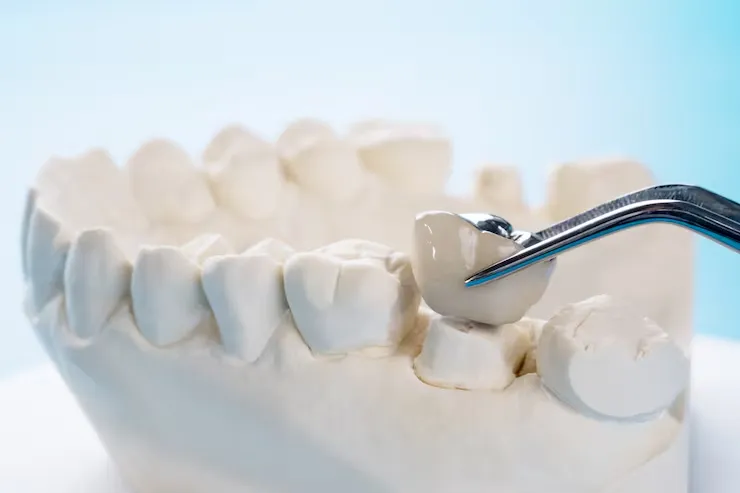
What Is a dental crown?
A crown is a custom cap that fits over a prepared tooth and covers the entire visible surface. It restores the tooth to a strong, functional, and natural‑looking form.
To make room for the crown, the tooth is gently reduced in size all around. The finished crown is then cemented permanently onto this prepared core, while the natural root stays in place and continues to support the tooth.
Crowns are one of the most versatile restorations in dentistry. They protect weak teeth, restore broken ones, anchor dental bridges, cover implants, and transform the appearance of discoloured, chipped, or misshapen teeth.
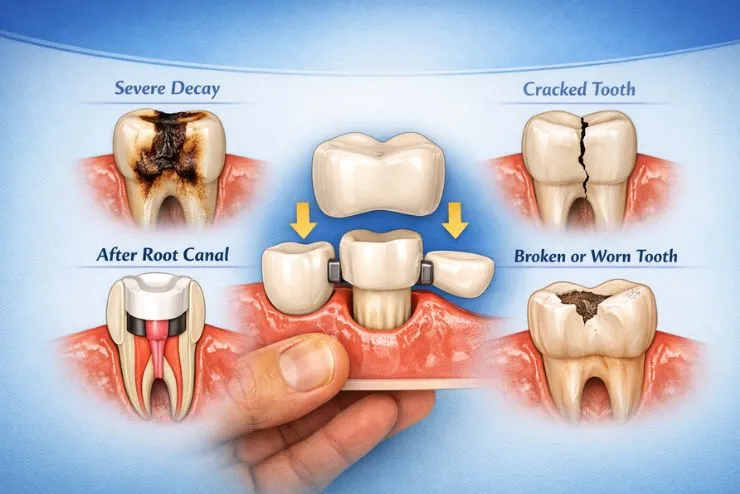
When is a crown needed?
A crown is often recommended for:
- Teeth with such extensive decay that a filling would not be strong enough.
Cracked teeth (for example, fractured cusps) that need the crown to bind and protect them. - Root‑canal‑treated back teeth, which are more brittle and prone to fracture without a crown.
- Teeth worn down significantly from grinding (bruxism), where height and shape must be rebuilt.
- Teeth with very large, failing fillings that risk splitting the remaining tooth.
- Severely discoloured teeth or misshapen teeth are not suitable for veneers
- Teeth that will support a dental bridge.
- Implants that require a prosthetic crown to be placed on top.
Crown Materials at DSC
At DSC, we use only proven, high‑performance ceramic systems for crowns:
Procera crowns
CAD/CAM‑milled all‑ceramic copings (alumina/zirconia)
3M LAVA zirconia
High‑strength, translucent zirconia with excellent marginal fit and lifelike appearance for both front and back teeth.
Zirconia crowns
Monolithic or multilayer zirconia crowns milled from solid blocks for maximum strength and durability under heavy bite forces.
Cercon zirconia
Hybrid multilayer zirconia from Dentsply Sirona, combining 1200 MPa dentin strength with natural tooth‑like translucency.
Translucent zirconia from Amann Girrbach
Super‑ and high‑translucent Ceramill zirconia blanks engineered to balance >1000 MPa strength with excellent aesthetics for single crowns and long‑span bridges.
The procedure — Step by Step

Assessment
The tooth and bite are examined, and tests are done to confirm nerve status. Digital X‑rays assess the root, bone level, and any existing filling or crack; CBCT may be used for complex cases. Material choice and crown design are selected based on tooth location, remaining tooth structure, and bite forces.

Tooth preparation
Under local anaesthetic, the outer surface of the tooth is reduced by about 1–2 mm all around to create space for the crown. A clear margin (finish line) is shaped around the tooth at the right level relative to the gum, and any decay or weak tooth structure is removed. If the tooth has undergone root canal treatment and requires additional support, a post and core may be placed first.

Digital scan
An intraoral scanner records a 3D digital impression of the prepared tooth, the neighbouring teeth, and the opposing jaw. There are no impression trays or setting times, and any missing detail can be rescanned immediately. The bite is also scanned to record how your teeth meet. Typical scan time is a few minutes.

Temporary crown
A temporary crown is fitted at the same visit. It protects the prepared tooth, maintains your smile and bite, and allows you to chew comfortably while the permanent crown is being made. Lab turnaround is usually 10–14 working days.

Crown try in
At the next visit, the permanent crown is placed on the tooth without cement first. The margins, contact points, bite, and appearance are all checked, and the shade is viewed in natural light to ensure a good match. Any fine adjustments are done before final cementation.

Cementation
Once everything is confirmed, the crown is bonded with the most suitable cement (often a resin cement for ceramic crowns). The bite is re‑checked and refined if needed. The entire fitting appointment generally takes 45–60 minutes, and you leave with a fully functional permanent crown.
Recovery and Aftercare

With a temporary crown
- Expect some sensitivity to cold and pressure; this is normal.
- Avoid very hard, crunchy, or sticky foods on that side, as sticky foods can dislodge the temporary.
- Brush gently and slide the floss out through the side instead of snapping it up.
After the permanent crown fitting
- Mild sensitivity or a slightly “high” feeling in the bite for a few days is common as your mouth adapts.
- If one spot feels like it hits first, book a quick bite adjustment; this is usually a simple 10‑minute visit.
- Resume a normal diet the next day, but avoid extremely hard foods for a week.
- Brush and floss around the crown as you would a natural tooth, paying special attention to the gum line.
- If you grind your teeth, a custom night guard is strongly recommended after the crown is placed, as grinding is a leading cause of crown fractures and loosening.
- Attend 6 monthly check-ups so the crown margins, gums, and bite can be monitored.
Dental Crown Cost in Bangalore
Cost varies based on the material (PFM or zirconia), tooth position (front vs back), and whether a post and core are needed. A Zirconia Crown (Full) costs ₹8,000 – ₹15,000 each, while a Metal-Ceramic (PFM) Crown ranges from ₹4,000 – ₹7,000 per crown.
All fees are explained and confirmed in a written treatment plan before any preparation begins.
Frequently Asked Questions
Does getting a crown hurt?
No. The tooth is numbed with local anaesthetic, so you should not feel pain during the procedure. Afterwards, it is normal to have a few days of sensitivity to cold or pressure, which usually settles with ibuprofen and sensitive toothpaste; severe or spontaneous pain is uncommon and should be checked.
How long will my crown last?
With good hygiene, a healthy supporting tooth, and a stable bite, crowns often last 15–25 years. Grinding without a night guard, decay at the crown margin, and gum disease are the main reasons crowns fail earlier.
Can a crown fall off?
A permanently cemented crown should stay in place, but the cement can occasionally fail. If a crown feels loose or comes off, keep it safe, avoid chewing on that side, and see your dentist promptly to have it assessed and usually re‑cemented.
Do I need a crown after root canal treatment?
For back teeth, almost always yes. Root‑treated premolars and molars are more brittle and at higher risk of cracking without a crown, which can lead to tooth loss. Front teeth with minimal structural loss may sometimes be managed without a full crown, depending on the case.
Why does my crown look darker at the gum margin?
A dark line at the gum edge is usually the metal collar of an older porcelain-fused-to-metal crown, which shows as the gum recedes. Modern all-ceramic crowns, such as zirconia, have no metal core, so replacing old metal-based crowns with all-ceramic ones removes this grey shadow.