
Dental Inlays & Onlays in Bangalore | CAD/CAM Ceramic Restorations at DSC, Indiranagar
Not every damaged tooth needs a full crown, and some cavities are too extensive for a reliable filling. Between these two lies a frequently underused option: the ceramic inlay or onlay.
An inlay sits inside the cusps of the tooth like a precisely fitted puzzle piece, while an onlay also covers one or more cusps and is often called a “partial crown”. Both are digitally designed, milled from high-strength ceramic, and bonded to the tooth, preserving more of the healthy structure than a full crown yet offering far greater strength and longevity than a large composite filling.
At DSC, Dr. Ramya D S (MDS Prosthodontist, BDS Gold Medallist, Certified DSD Practitioner) designs and fits inlays and onlays using a Planmeca intraoral scanner and CAD/CAM ceramic fabrication.

What is the Difference Between Filling, Inlay, Onlay, and Crown?
| Restoration | Covers | Best for | Typical lifespan |
|---|---|---|---|
| Composite filling | Inside the cavity only | Small to medium cavities | 5–10 years |
| Inlay | Within cusps, no cusp coverage | Medium cavities between cusps | 10–20 years |
| Onlay | Within and over one or more cusps | Large cavities, cracked or weak cusps | 10–20+ years |
| Crown | Entire tooth surface | Heavily damaged or fractured teeth | 15–25 years |
Who Needs an Inlay or Onlay?
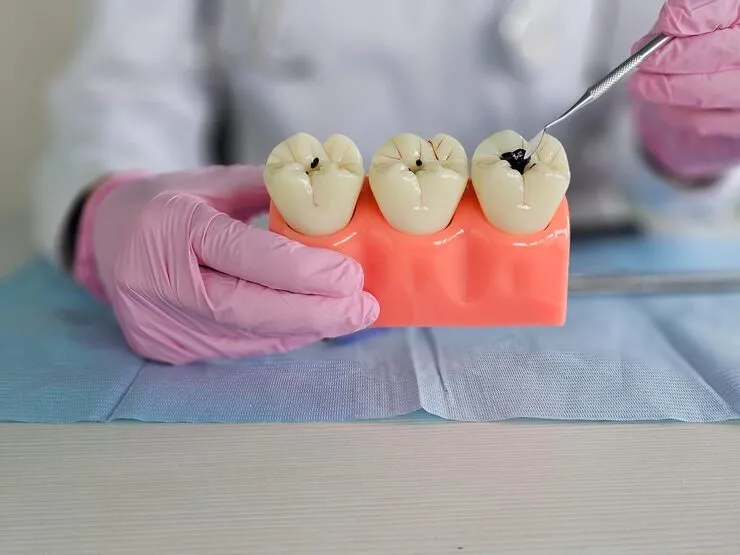
- Teeth with large cavities that are too big for a long‑lasting filling, but still have enough sound tooth that a crown would be excessive.
- Old, extensive amalgam or composite fillings that are cracked, failing, or making the tooth likely to split.
- Cracked or weakened cusps that need coverage and reinforcement without full‑crown preparation.
- Previously heavily filled teeth that are now structurally compromised, where a bonded ceramic onlay offers a more durable rebuild than another filling.
- Patients who want conservative treatment that preserves maximum tooth structure with strong, long‑term restorations.
The procedure — Step by Step

Assessment and material choice
The tooth is examined, and X‑rayed to decide between inlay, onlay, or crown and to select ceramic type.

Tooth preparation
After local anaesthetic, decay and failing filling material are removed, and the tooth is shaped for an inlay/onlay with minimal reduction compared to a crown.

Digital scan
A Planmeca Primescan captures a 3D model of the prepared tooth and bite in a few minutes, eliminating the need for messy impression materials.

Temporary restoration
A temporary filling or provisional inlay/onlay protects the tooth while the ceramic is milled and finished (usually 10–14 working days).

Fitting and bonding
The ceramic inlay/onlay is tried in, adjusted, then bonded with resin cement to create a strong, integrated tooth–restoration unit; the bite is checked, and the visit typically takes about 60–75 minutes.
Recovery and Aftercare

With a temporary restoration:
Expect mild sensitivity and avoid very hard or sticky foods on that side; contact DSC if the temporary loosens.
After permanent inlay/onlay fitting:
Light sensitivity for a few days is common, and any “high” bite spots can be quickly adjusted. Brush and floss normally (including around the margins), avoid very hard items such as ice or boiled sweets for the first week, consider a night guard if you grind, and attend six‑monthly check‑ups so the restoration and gums can be reviewed.
Inlay and Onlay Cost in Bangalore
Inlay and onlay costs depend on the size of the restoration (inlay vs onlay), the material, and the tooth location.
The cost of ceramic (porcelain) inlays or onlays in DSC, Bangalore, usually ranges from ₹6,000 to ₹12,000 per tooth.
All costs are confirmed in writing before preparation begins.
Frequently Asked Questions
When do I need an inlay or onlay instead of a filling?
They are recommended when a cavity or old filling is too large for a reliable composite, but the tooth still has enough healthy structure that a full crown would remove more tooth than necessary.
Are ceramic inlays and onlays strong and long lasting?
Yes. Bonded CAD/CAM ceramic inlays and onlays are highly durable and, with good oral hygiene, typically last 10–20 years or more, often outlasting large composite fillings of similar size.
How many appointments are needed?
Most cases need two visits: the first for preparation, digital scanning, and a temporary, and the second for trying in, bonding, and adjusting the final ceramic restoration.
Is the procedure painful?
The tooth is numbed with local anaesthetic during preparation, so you should feel only pressure or vibration; fitting the inlay/onlay itself usually needs no additional anaesthetic.
How do I care for a tooth with an inlay or onlay?
Brush twice daily, floss carefully around the margins, avoid biting very hard objects (like ice), and wear a night guard if you grind; attend regular 6-monthly check-ups so the restoration and gums can be monitored.
Are inlays and onlays more expensive than fillings?
Yes, they cost more than a large composite filling but are often less than a full crown; in many cases, their extra durability and tooth preservation make them a better long‑term value.
Can an inlay or onlay be replaced later with a crown if needed?
If the tooth changes in future (for example, new decay or fracture), it can usually still be converted to a crown; starting with an inlay or onlay preserves more tooth structure for that possibility.