
Dentures in Bangalore | Partial & Complete Denture Prosthetics at DSC, Indiranagar
Missing teeth or an old, loose denture can cause you to avoid certain foods, shy away from photos, and feel older than you are. A well-made modern denture can easily restore your smile, bite, and confidence in everyday interactions.
Modern dentures are far more comfortable and natural‑looking than older ones, thanks to better materials and more precise techniques. At DSC, every denture is designed and fitted by Dr. Ramya Balasubramanya, MDS Prosthodontist and BDS Gold Medallist, with the same careful planning and aesthetic focus used in full‑mouth rehabilitation cases.
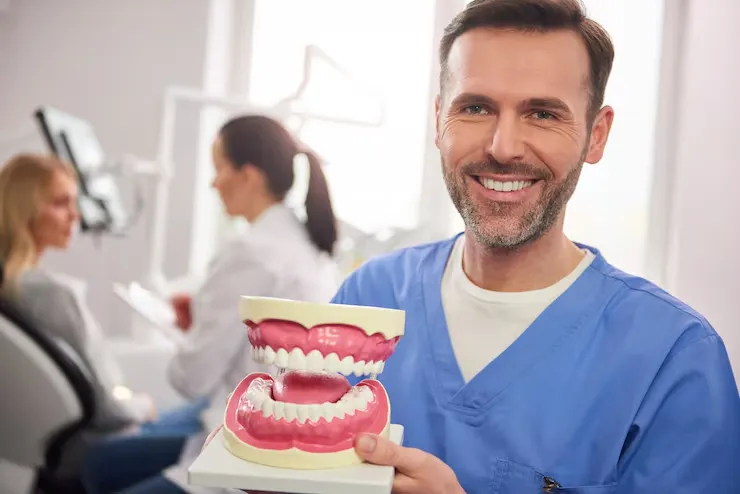
Types of Dentures at DSC
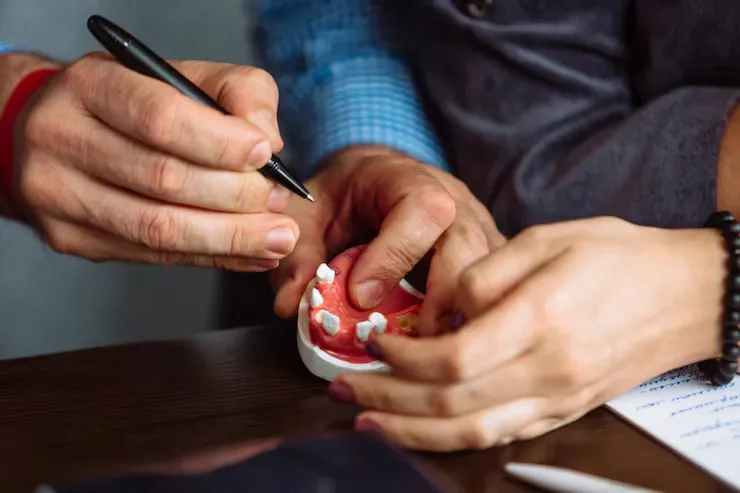
Partial denture – replacing some missing teeth
A partial denture fills gaps in a jaw where some natural teeth remain. It uses clasps on the remaining teeth for support and is removed for cleaning and at night.
They are appropriate as a cost-effective interim solution while planning implants, or as a long-term replacement option when implants are not indicated or not preferred.
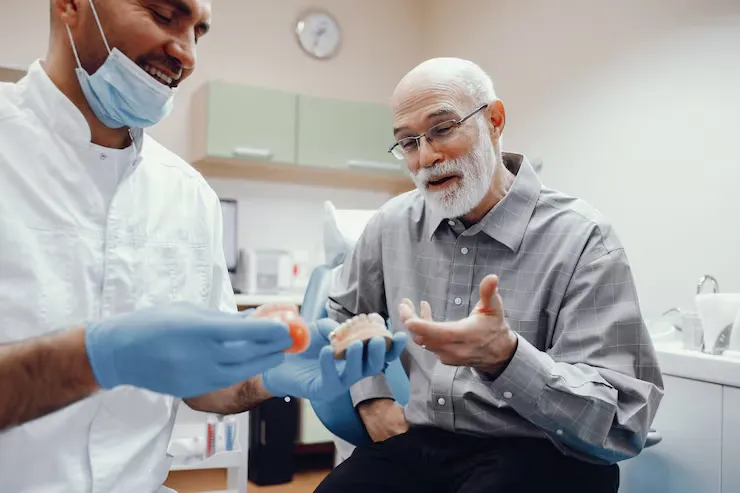
Complete denture – replacing all teeth
A complete denture replaces all teeth in one arch. The upper denture is held mainly by suction against the palate, while the lower sits on the gum ridge and is naturally less stable.
Complete dentures require several fitting appointments to achieve the correct bite, aesthetics, and stability. They are the most cost-effective option for full-arch tooth replacement, but do not prevent bone resorption under the denture, which causes gradual loosening over the years as the gum ridge changes shape.
Immediate denture – teeth out, denture in the same day
An immediate denture is made before extractions and fitted straight after your teeth are removed, so you are never without teeth. As gums and bone shrink during healing (over 6–12 months), the denture usually needs a reline or remake to match the new shape.
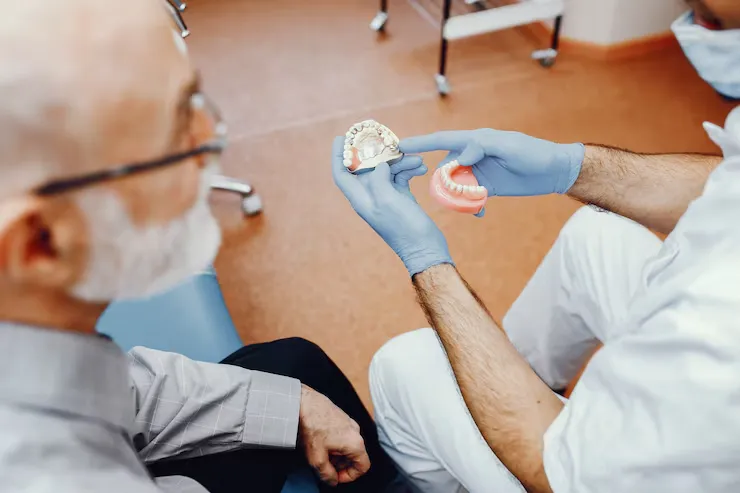
Implant retained overdenture – more stability and less bone loss
An implant‑retained overdenture is a removable denture that clips onto 2–4 implants in the jaw. The implants help preserve bone, add major stability, and improve chewing and confidence compared with a conventional denture.
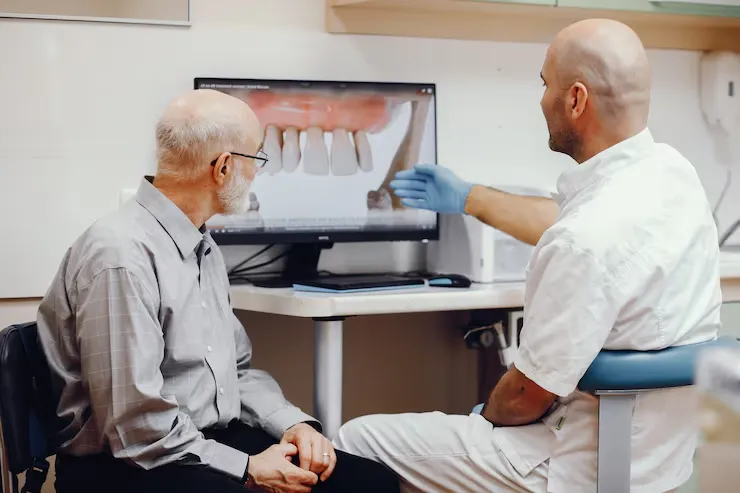
What are some alternatives to dentures?
If you want a non-removable solution, full-arch implant bridges (such as All-on-4 or All-on-6) can replace all teeth with a fixed prosthesis supported by 4–6 implants. These do not come out and feel more natural than dentures, but are a different treatment category from dentures. Fixed dental implant options are discussed alongside dentures during your consultation so you can choose the option that best matches your health, bone structure, and budget.
The denture fitting process

Initial assessment
Remaining teeth (for partials), gum ridges, bite, and facial profile are examined. Teeth that need treatment or extraction before making the denture are identified, and photos are taken for aesthetic guidance.

Primary impressions
First impressions are taken using standard trays to create custom trays that better match your mouth.

Custom impressions and bite registration
Custom trays capture the full shape of the ridges more accurately. A bite registration records how your jaws meet, and you and the dentist choose tooth shade and shape at this visit.

Wax try in
Teeth are set in wax on the planned base. You try this to check bite, lip support, tooth position, and overall appearance. Changes are made while everything is still easy to adjust.

Fitting appointment
The finished denture is fitted and checked for comfort, bite, and retention. Small pressure points are relieved, and you are shown how to insert, remove, and clean the denture.
Review and adjustments
A review after 1–2 weeks allows for fine adjustments to relieve sore spots and refine the bite. Most new dentures need at least one or two small adjustments in the first few weeks. This is normal.
Recovery & aftercare – looking after your denture

Getting used to a new denture
- Wear it most of the day to help your mouth adapt.
- Begin with soft foods and cut food into small pieces; build up to firmer foods over 2–4 weeks.
- Expect some speech changes for the first 1–2 weeks; reading aloud at home helps.
- Mild gum soreness is common early on; persistent sore spots should be adjusted at your review.
- Remove the denture at night to let the gums rest.

Cleaning your dentures
- Remove and rinse the denture after meals.
- Brush it daily with a soft denture brush and non‑abrasive denture cleanser; avoid normal toothpaste as it scratches acrylic.
- Soak overnight in water or a denture‑cleaning solution.
- Brush your gums, palate, and tongue gently while the denture is out to keep the mouth tissues healthy.

Important “don’ts”
- Do not use hot water, which can warp the denture.
- Do not attempt to adjust or bend clasps yourself.
- Do not rely on adhesive to hold a poorly fitting denture long‑term; adhesive is only a helper, not a fix.
- Contact DSC if the denture feels much looser, causes significant pain, or breaks early. Attention prevents bigger problems.
Denture Cost in Bangalore
Denture cost depends on the type (partial or complete), the number of teeth replaced, and the materials used.
Cost of dentures at DSC:
- Removable partial denture: ₹8,000 – ₹18,000
- Complete denture: ₹12,000 – ₹25,000
- Implant‑supported denture: ₹80,000 – ₹1,80,000
Your full cost breakdown is provided in writing at the planning appointment.
Frequently Asked Questions
Will my denture look natural?
Yes. Modern denture teeth and bases are designed to look very natural. At the wax try‑in stage, you see the tooth shade, shape, and size in your mouth and approve the look before the final denture is processed.
How long does it take to get used to a denture?
Most people adapt in about 4–8 weeks. Speech usually improves within 1–2 weeks, and chewing confidence builds as you slowly add firmer foods. Lower full dentures typically take longer to get used to than upper dentures, so steady daily wear is important.
My denture is loose. Can it be fixed without making a new one?
Often yes. If the base and teeth are in good condition, a reline can add fresh acrylic to the fitting surface to match your current gums, which is cheaper than a new denture. If the denture is very old, worn, or poorly designed, making a new one is usually the better option.
Are implant retained dentures much better than conventional ones?
For many people, especially in the lower jaw, yes. Overdentures that clip onto 2–4 implants are far more stable for eating and speaking, improve chewing efficiency and confidence, and help slow bone loss so the fit stays good for longer.
Do I have to wear dentures at night?
No. It is usually better to remove dentures at night to let the gums rest and to reduce the risk of sore spots and infections.
How do I clean my dentures?
Take them out after meals to rinse, brush daily with a soft denture brush and non-abrasive cleanser, and soak them overnight. Also, clean your gums, tongue, and palate while the denture is out.
Are dentures only for older people?
No. Dentures and overdentures are used at many ages when multiple teeth are missing due to decay, gum disease, trauma, or medical conditions.