
Invisalign in Bangalore | Clear Aligner Orthodontics at DSC, Indiranagar
Invisalign straightens teeth without metal braces, using a series of custom clear aligners instead of brackets and wires. Each aligner makes a small, controlled movement; by the end of the series, your teeth reach the planned final position.
The aligners are nearly invisible, removable for eating and cleaning, and your treatment is digitally planned so you can preview a step-by-step simulation of how your teeth will move and what your new smile will look like before you start.
At DSC, Invisalign is provided by Dr. Ramya Balasubramanya— MDS Prosthodontist, Certified Invisalign Provider with over a decade of experience treating adult Invisalign patients in Bangalore.
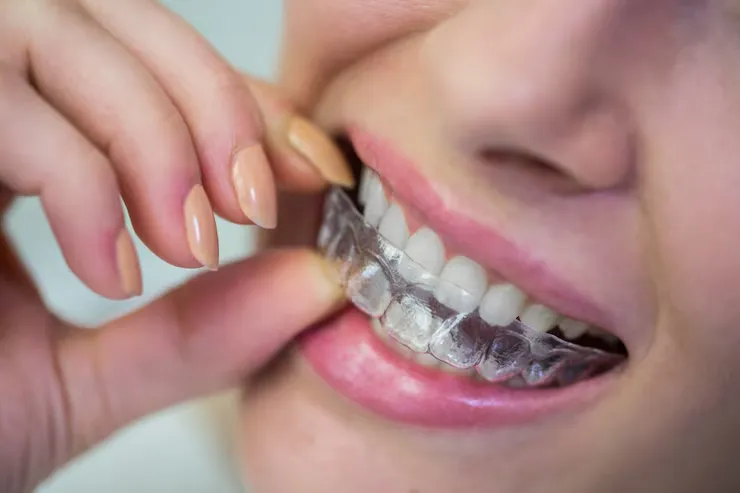
What Is Invisalign?
Invisalign is a clear aligner system from Align Technology that uses a series of transparent, removable trays, each slightly different from the last, to move teeth into their ideal positions progressively. A 3D digital scan of your teeth is uploaded to the Invisalign platform, where ClinCheck software calculates the required movements and generates an animation of every stage from your current bite to the final result.
You review this simulation with Dr. Ramya, request any adjustments, and only once you approve the plan are the aligners manufactured and sent to DSC. You then wear each aligner for about 1–2 weeks before moving to the next in the series.
What can Invisalign treat?
Invisalign can correct many common orthodontic problems in adults and teenagers, including:
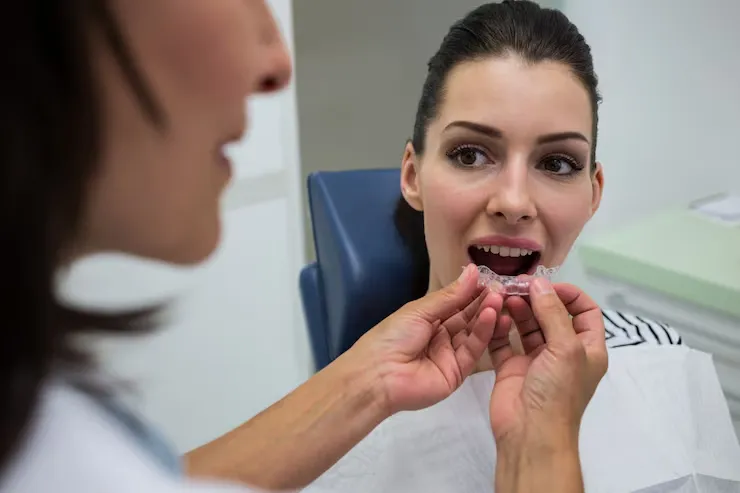
Severe rotations, major vertical movements, and significant jaw discrepancies may still need fixed braces or combined orthodontic–surgical treatment; Dr. Ramya will advise whether Invisalign is suitable for your specific case.
The Invisalign process at DSC

Consultation
Dr. Ramya examines your teeth, bite, gums, and existing restorations, discusses your concerns, and confirms whether Invisalign is appropriate; you leave with clear options and no pressure to proceed.

Digital records
A Planmeca Primescan 3D intraoral scan, photos, and bite registration are taken and submitted to Invisalign for ClinCheck planning.

ClinCheck simulation
In about 1–2 weeks, your ClinCheck will be ready. At a review visit, you see the animated tooth movements and outcome; any changes are made before you approve and commit.

Aligner fabrication and first fitting
After approval, the aligners are manufactured and sent to DSC. At your first fitting, the initial aligner is placed, tooth‑coloured composite attachments are bonded where needed to help specific movements, and you receive detailed wear and care instructions.

Wearing your aligners
You change to a new aligner every 1–2 weeks at home. Review visits every 6–10 weeks, check progress against the plan, and provide your next sets.

Refinements
Once the first series is finished, your teeth are compared with the plan. If some movements are incomplete, a short refinement series is ordered — a routine part of most Invisalign treatments.

Retention
At the end, you receive a removable retainer plus a fixed lingual retainer behind the front teeth, along with instructions for long‑term wear to keep your teeth in their new positions.
Recovery and Aftercare

- Starting treatment: Wear aligners 20–22 hours daily, removing them only for meals, drinks other than water, brushing, and flossing. Rinse with cool water, clean gently with a soft brush (no hot water or abrasive toothpaste), store in the case when not in use, and expect a minor lisp for the first few days.
- During treatment: Bring all current aligners to each review, contact DSC promptly if one is lost or broken, keep attachments and teeth very clean, avoid chewing with aligners in, and report any severe or unexpected pain.
- After treatment (retention): Wear your retainer nightly (especially for the first two years) and maintain your fixed lingual retainer carefully; if a retainer breaks, no longer fits, or debonds, arrange a replacement immediately to prevent relapse.
Cost of Invisalign Treatment in Bangalore
Invisalign fees vary with case complexity, which is classified as Lite, Moderate, or Comprehensive based on the number of aligners and the amount of movement required.
Invisalign treatment in Dental Solutions Clinic, Bangalore typically costs between ₹1,20,000 – ₹2,20,000
Combined Invisalign and cosmetic work is fully itemised, and you receive a written cost confirmation after the ClinCheck review and before any aligners are ordered.
Frequently Asked Questions
How is Invisalign different from other clear aligners?
Invisalign is the most extensively researched clear aligner system, with a large published evidence base and advanced digital planning (ClinCheck) backed by Align Technology’s global manufacturing platform; at DSC, Invisalign and ClearPath are both discussed, and the system chosen is the one best suited to your case.
Will Invisalign work for severe crowding?
Mild to moderate crowding is usually well suited to Invisalign. Still, severe cases, especially those requiring extractions or complex root torquing, may be better managed with fixed braces or a combined approach, which can be assessed in advance using your ClinCheck simulation.
Can I eat and drink normally with Invisalign?
Yes, you remove the aligners to eat and drink. Still, you must brush and floss before putting them back, and avoid wearing them with anything other than plain water to prevent enamel demineralisation, staining, or damage to the aligners.
I had braces as a teenager, and my teeth have moved. Can Invisalign fix this?
Often yes; treating orthodontic relapse is one of the most common adult Invisalign uses, and because movements are usually smaller, the treatment is typically shorter than the original braces, provided your teeth and gums are healthy, and you commit to lifelong retainers afterwards.
Does Invisalign hurt?
Most people feel mild pressure or tightness for 1–3 days with each new aligner, not sharp pain, and this usually settles quickly and is rated as more comfortable than fixed braces because there are no brackets or wires to rub.
Can I have Invisalign if I already have crowns or veneers?
In many cases, yes, as crowned and veneered teeth can still be moved, but attachment bonding and force direction need careful planning, so your dentist will review all existing restorations and advise if any limit treatment or need modification first.